Braskem: Training Design Method

Overview

Teaching Braskem's own team to build training, not shipping one training

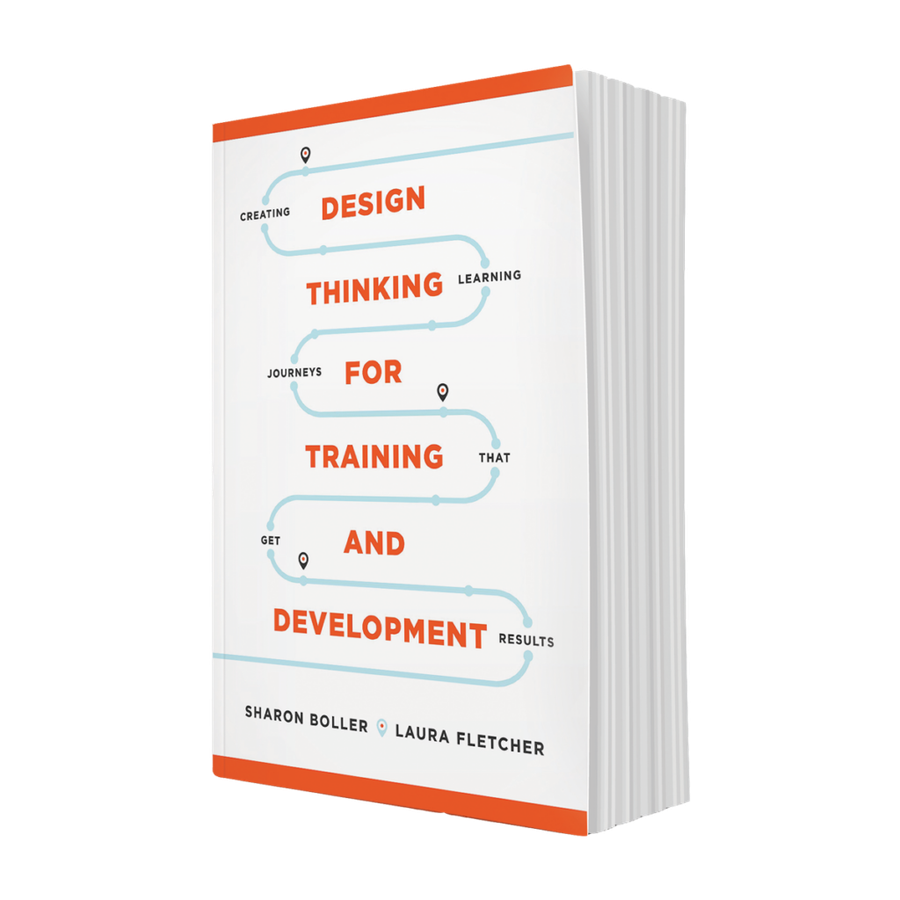
Cover of the book Design Thinking for Training and Development by Sharon Boller and Laura Fletcher
Design Thinking for Training and Development
Sharon Boller & Laura Fletcher (ATD)

Braskem's instructional team had no structured way to turn what a subject-matter expert knows into a training program that fits how learners actually work. The brief: design a method based on Design Thinking to help that team collect information and develop courses better suited to students and to Braskem's needs, then hand it off, piloted, to Braskem's Change Management team, the internal group responsible for how organizational changes get rolled out and adopted company-wide.

Underneath the training-specific language, this is Product Design work: user research through the learner survey and interviews, journey mapping for the learning experience (Canvas 10), and testing and iteration through the pilot and its feedback loop (Canvas 12), applied to an internal, unshipped product instead of a customer-facing one.

A four-person team ran this end to end: a Product Manager, an instructional designer who wrote the training content and UX copy, a mid-level designer who helped build out the canvases, and me as Design Lead. I designed the method itself, adapting the model from Design Thinking for Training and Development (Sharon Boller & Laura Fletcher, ATD) into Braskem's framework and defining every phase and canvas from a mind map I sketched of how the process should flow. That call leaned on my own background as a university lecturer for 16 years, teaching Computer Science and Design, plus a master's in Digital Design built around a usability-teaching methodology; it's part of why Braskem brought me onto this project.

Braskem is a Brazilian company with operations across the US and Europe, but this training center serves its Brazil-based teams, which is why the canvases and screenshots throughout this case are in Portuguese.
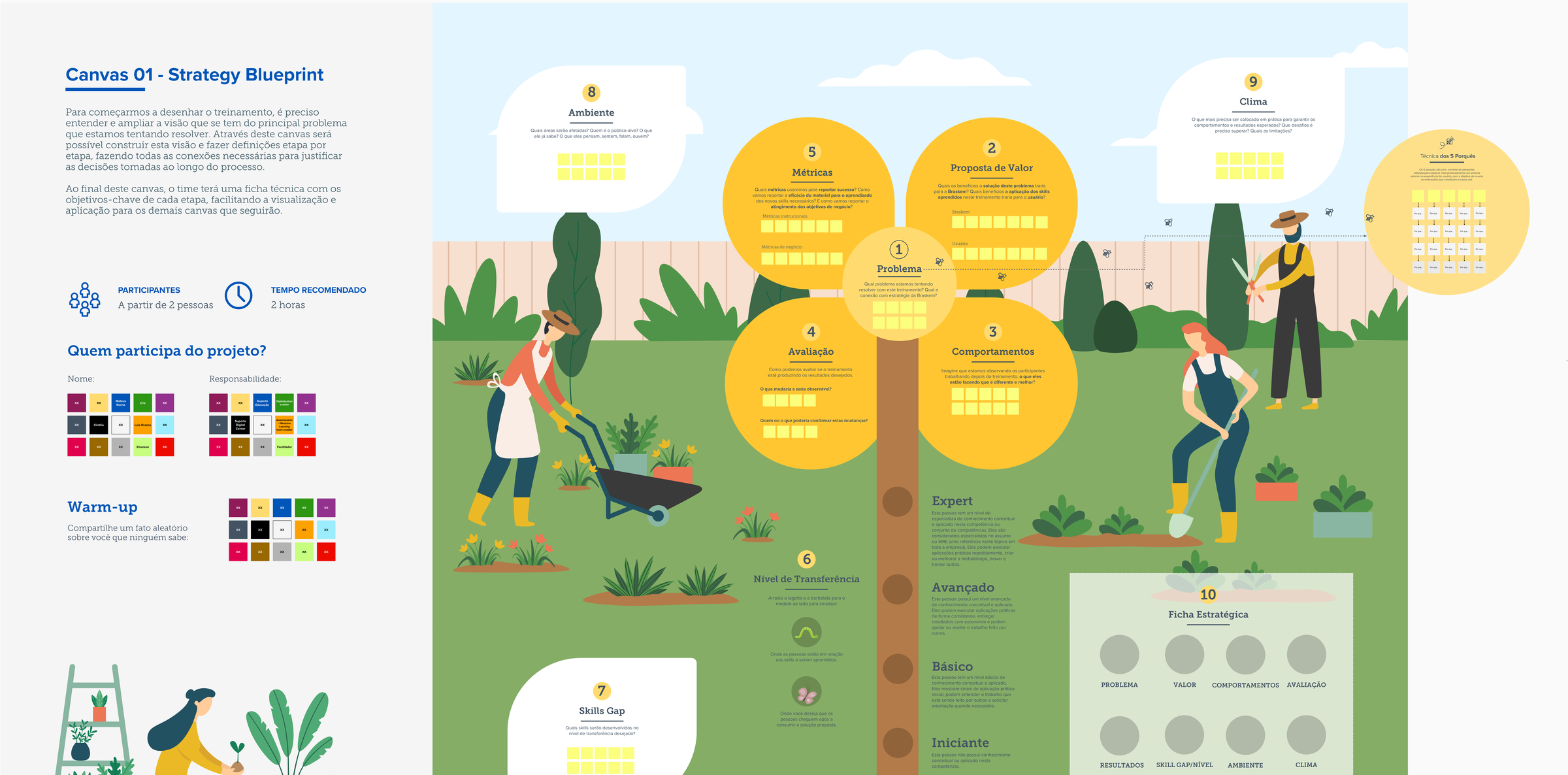
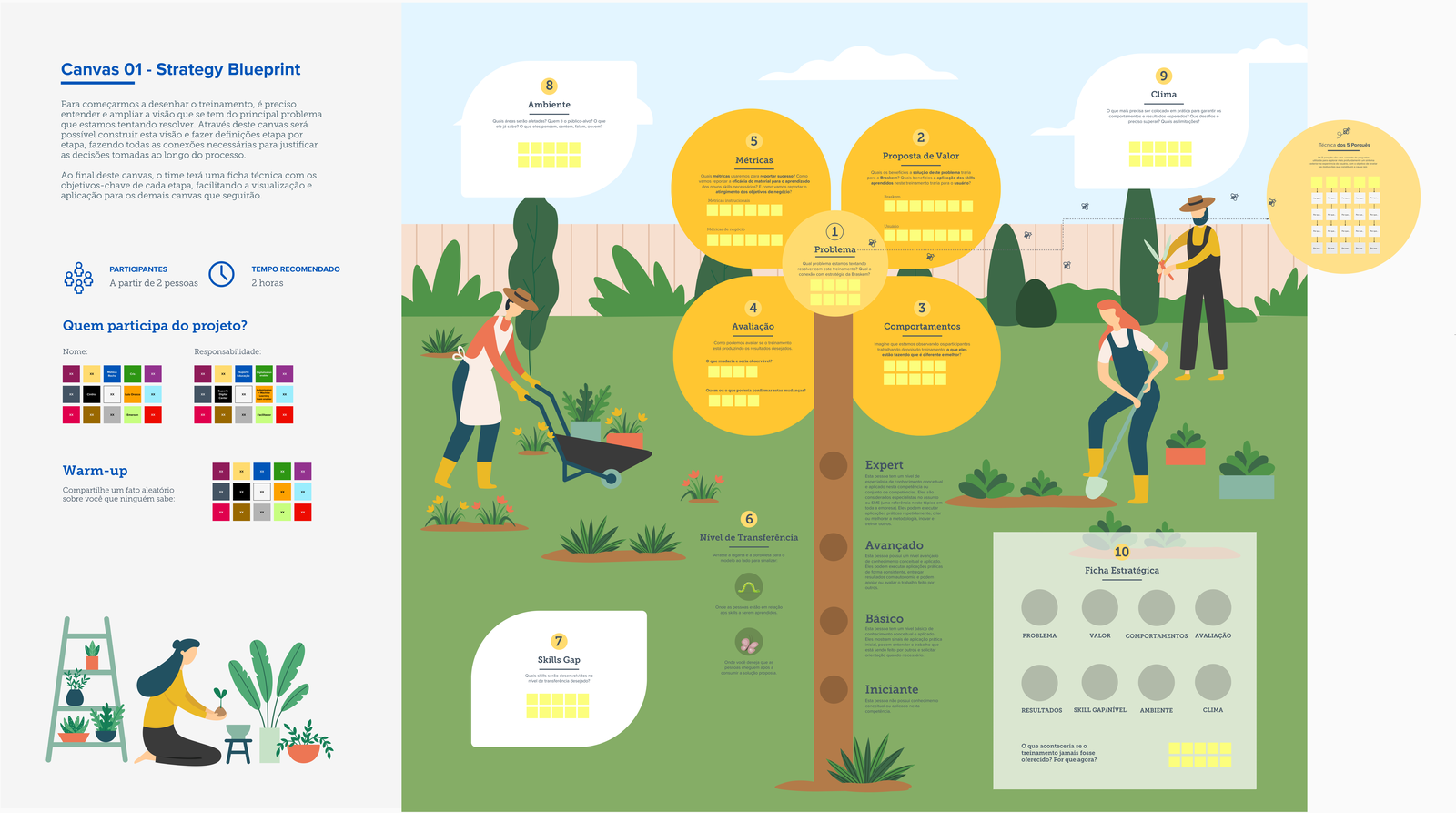
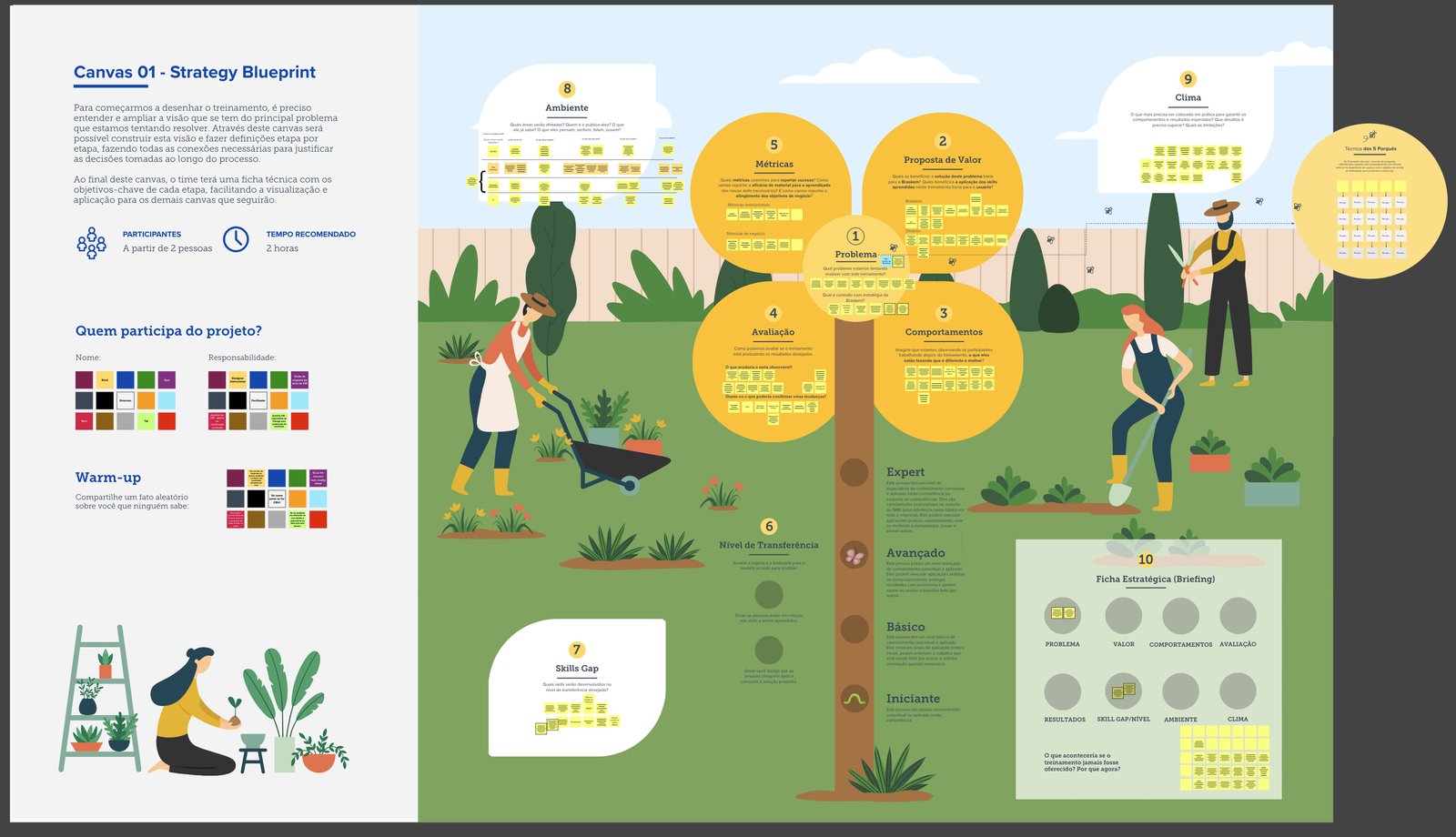
Canvas 01, Strategy Blueprint, the first tool in the Training Design Method Framework

Immediate Impact

The most important result you need to know

Designed and validated a Design Thinking based method for building training programs at Braskem/Avenue Code; a pilot with the Change Management team proved it by letting that team build its own training from the framework, with no further design support from me.
4
Framework Phases
12
Design Canvases
1
Team Trained to Self-Run the Method
~24h
Of Workshops to a Content-Ready Brief
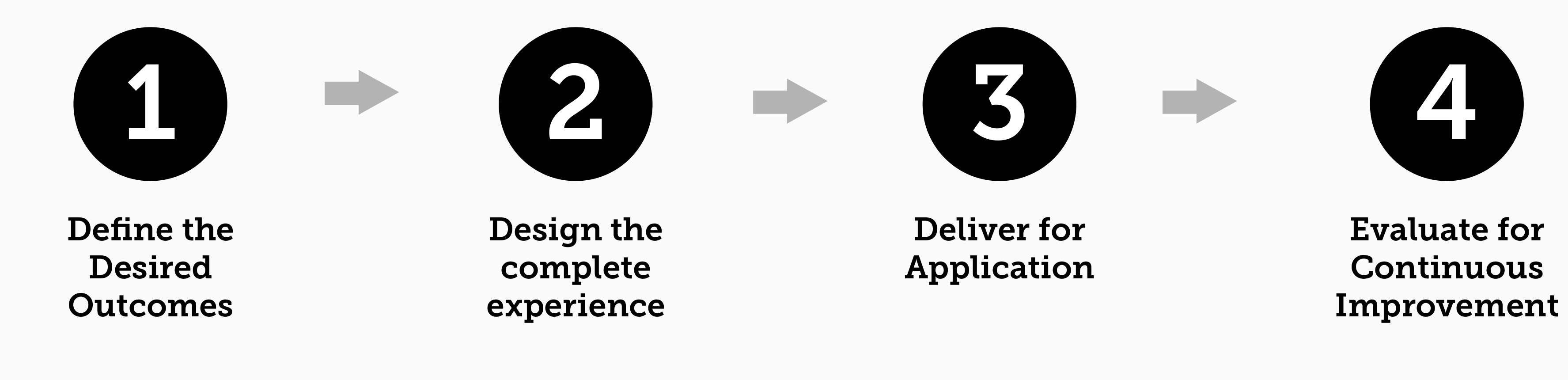
The Training Design Method's four phases: Define the Desired Outcomes, Design the Complete Experience, Deliver for Application, Evaluate for Continuous Improvement

The Framework

Four phases, twelve canvases, one method the team could run on its own

How I Designed the Method

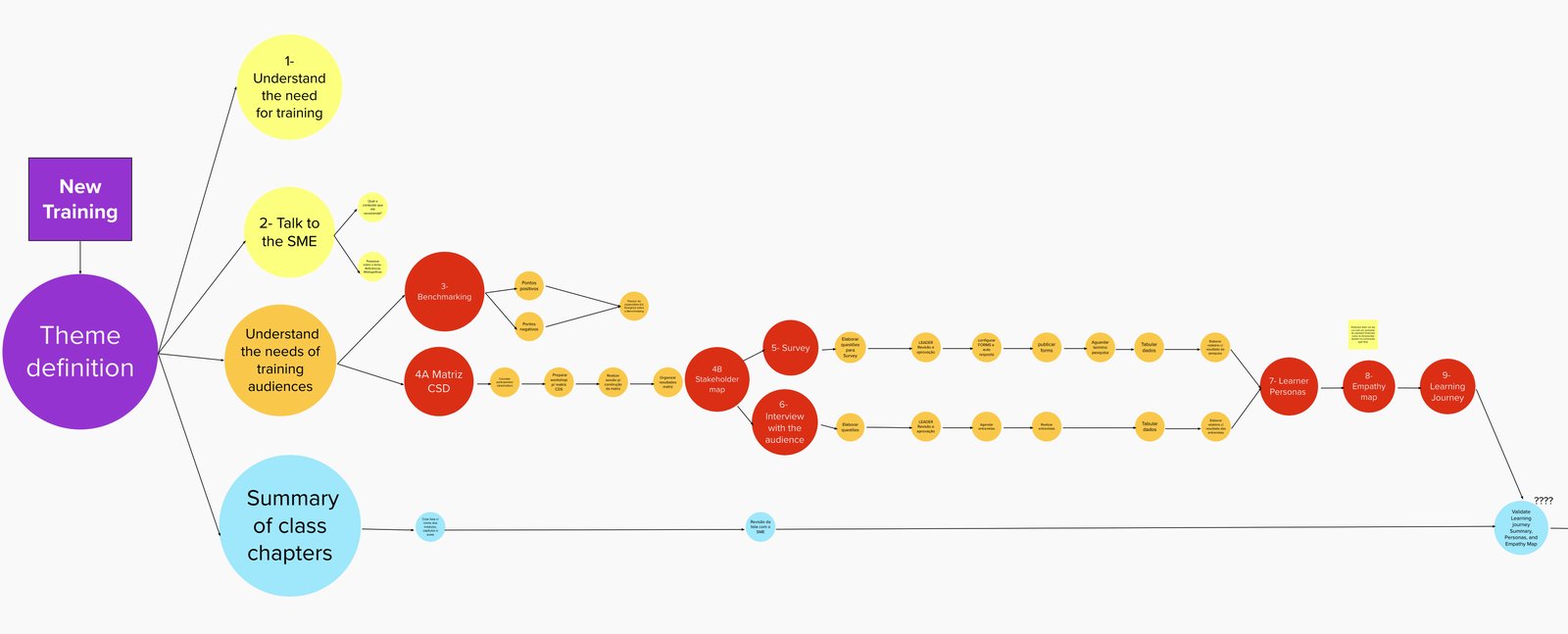
Before formalizing the four phases above, I worked through my own instinct for how a course gets built with Design Thinking and sketched it out by hand as a mind map, the actual origin of the framework's structure.

Hand-drawn mind map, part 1: from theme definition through learner personas, empathy map, learning journey, and the class-chapter handoff for the instructional designer
From New Training to Theme Definition, the reasoning behind Canvas 01 through Canvas 09: understanding the training need, talking to the SME, benchmarking, the CSD Matrix, stakeholder mapping, survey and interview, then tabulating that data into learner personas, empathy map and learning journey. The parallel Summary of Class Chapters branch, reviewed with the SME, is the running handoff the instructional designer needs to start writing content.
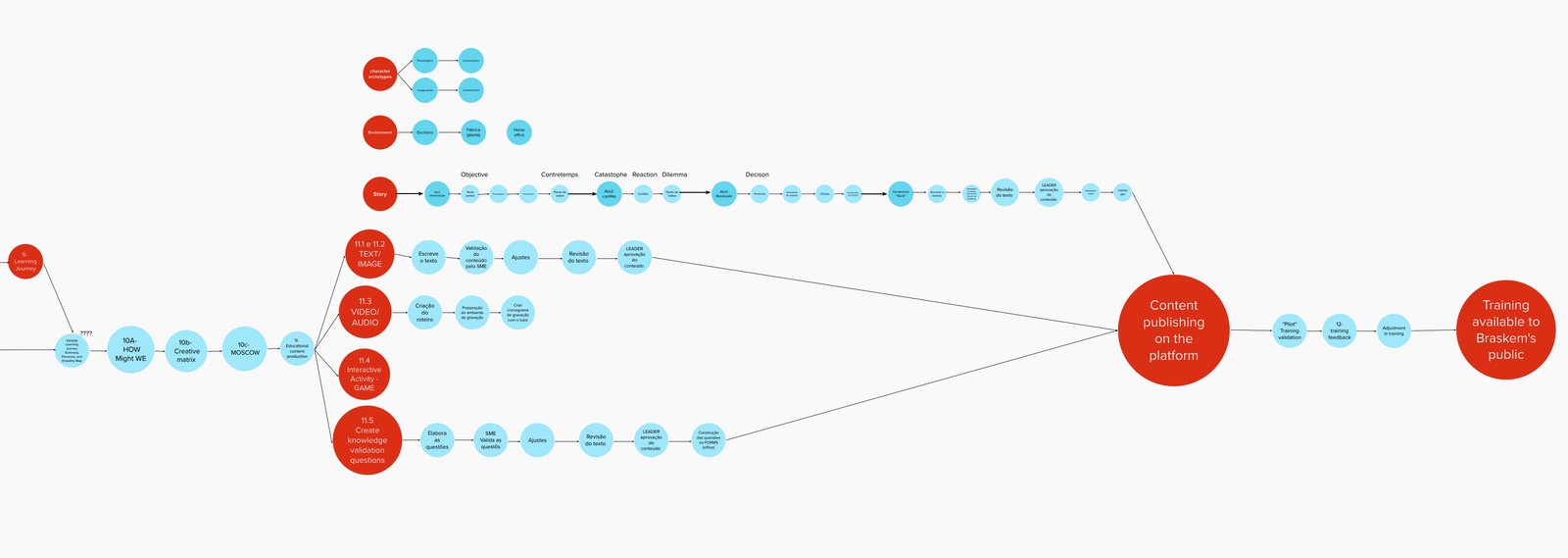
Hand-drawn mind map, part 2: from prioritization and story or character building through content production tracks to publishing, piloting and adjusting the training
Continuing into Canvas 10 through 12: How Might We, the Creative Matrix and MoSCoW prioritization set up content production, text and image, video and audio, interactive activities and knowledge-check questions, drawing on a parallel story and character-building branch for narrative content. Each track gets reviewed and approved before assembly, publishing on Braskem's platform, pilot validation and adjustments from training feedback.

1. Define the Desired Outcomes. Understand the problem, then empathize with the learner:

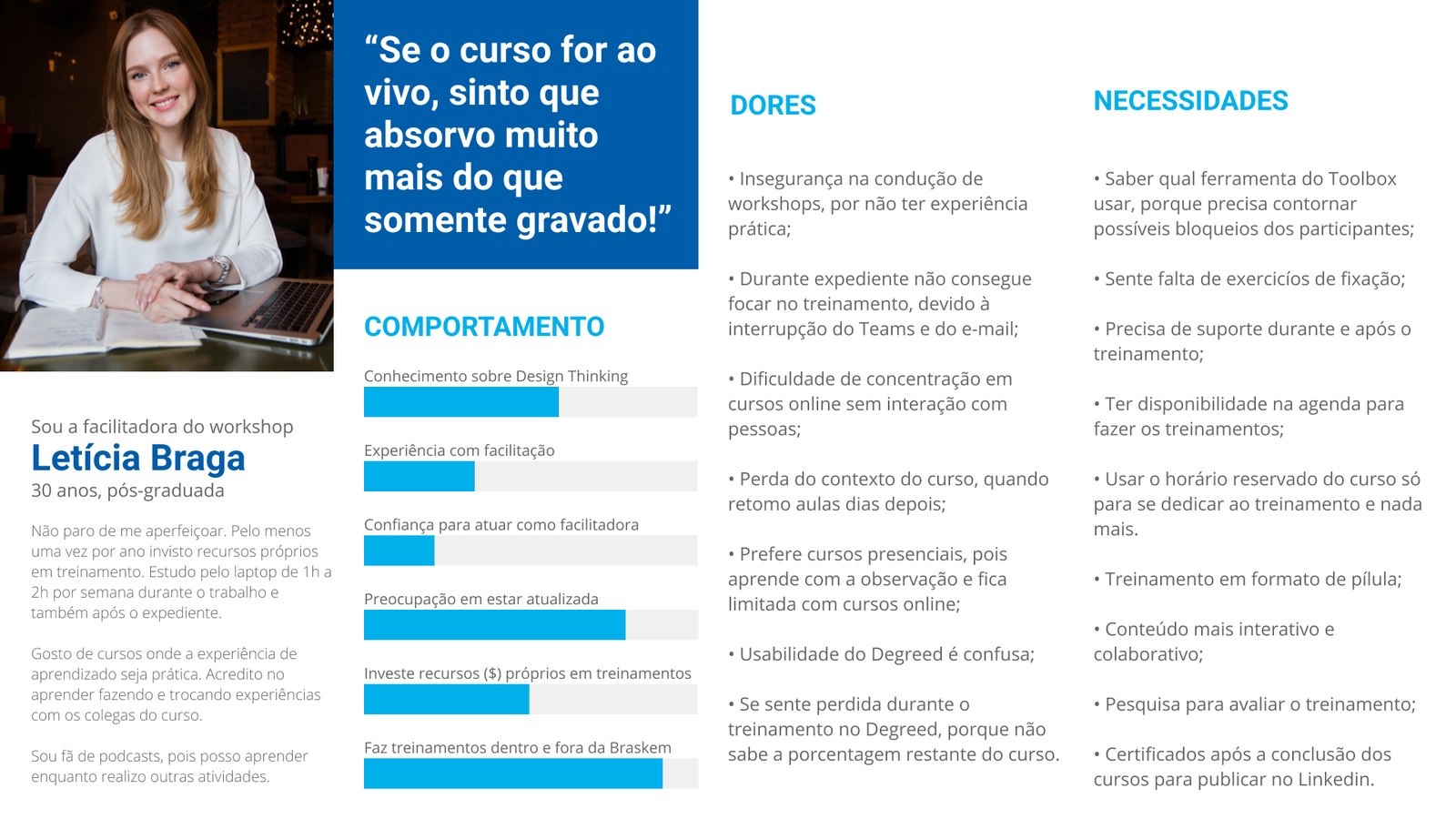
Learner persona: Leticia, the workshop facilitator, with her behaviors, pains and needs
Canvas 08, Learner Personas: Leticia, the workshop facilitator, built from the survey and interview data below.
  • Canvas 01, Strategy Blueprint: frames the problem first, what training is being requested, why, and what content it needs to cover, worked through with all stakeholders and the design team before anything else starts.
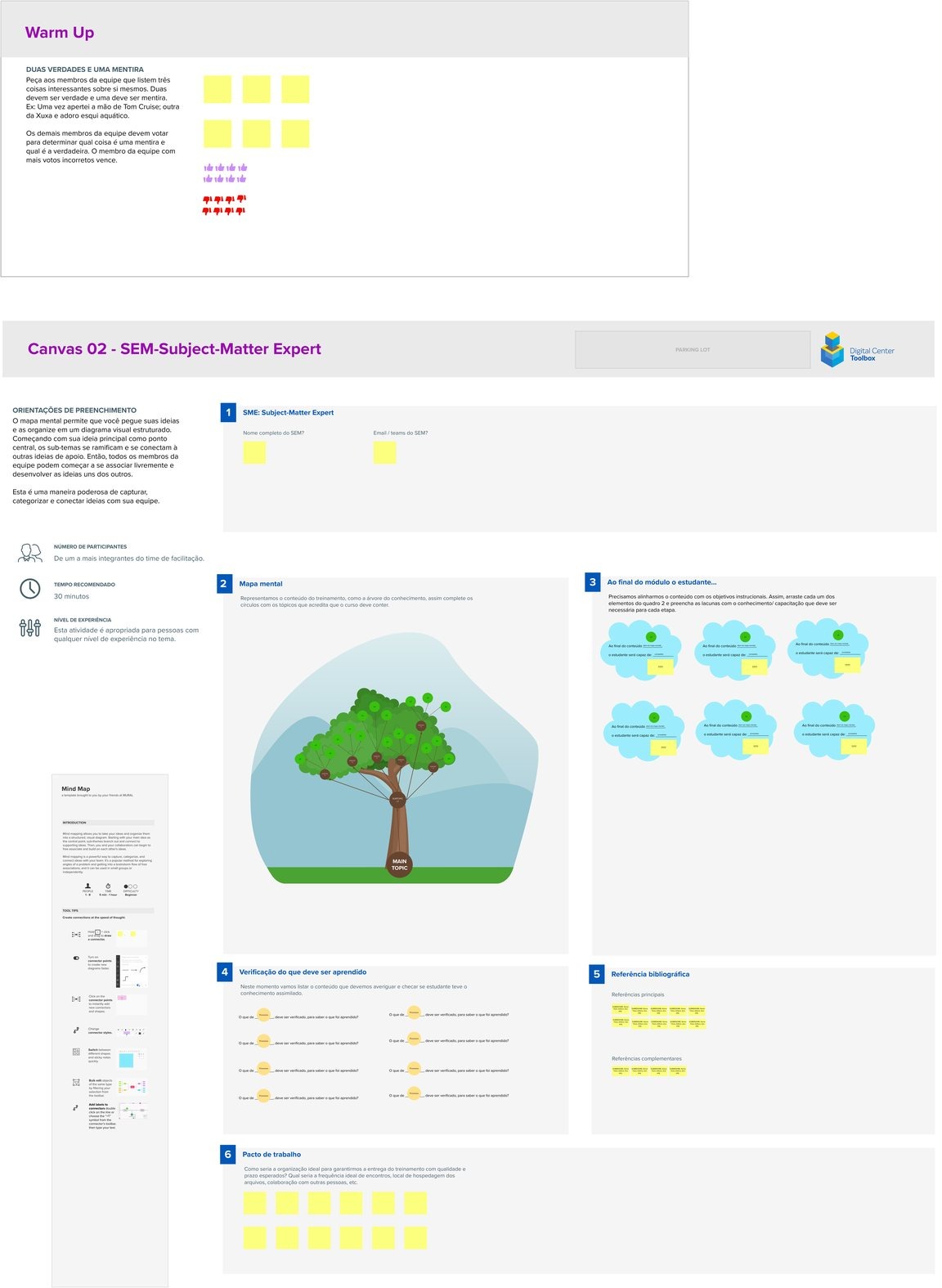
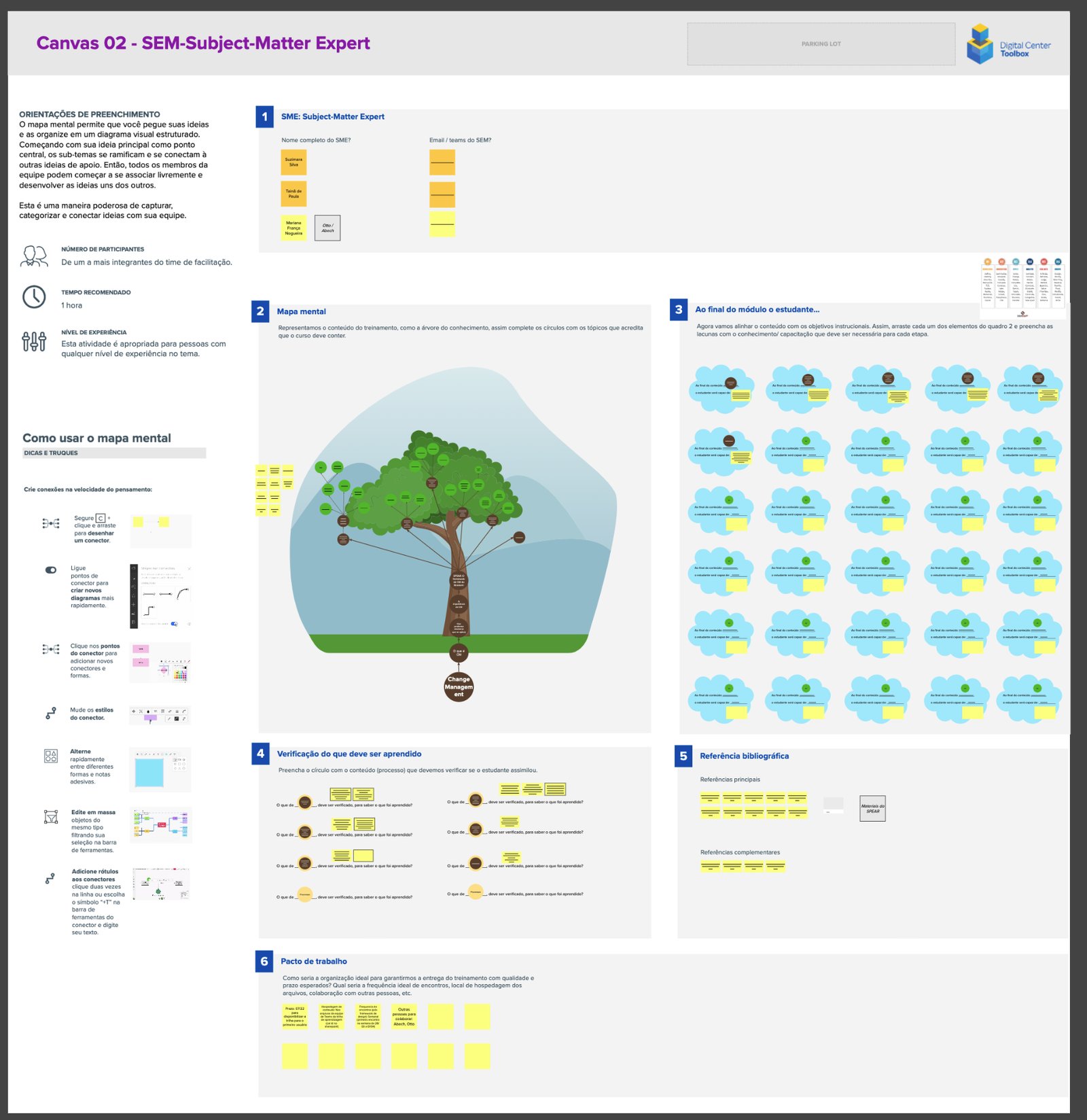
  • Canvas 02, SME Mindmap: captures what the subject-matter expert, or SME, whoever at Braskem holds deep knowledge of the training topic, knows about it as a structured mind map.
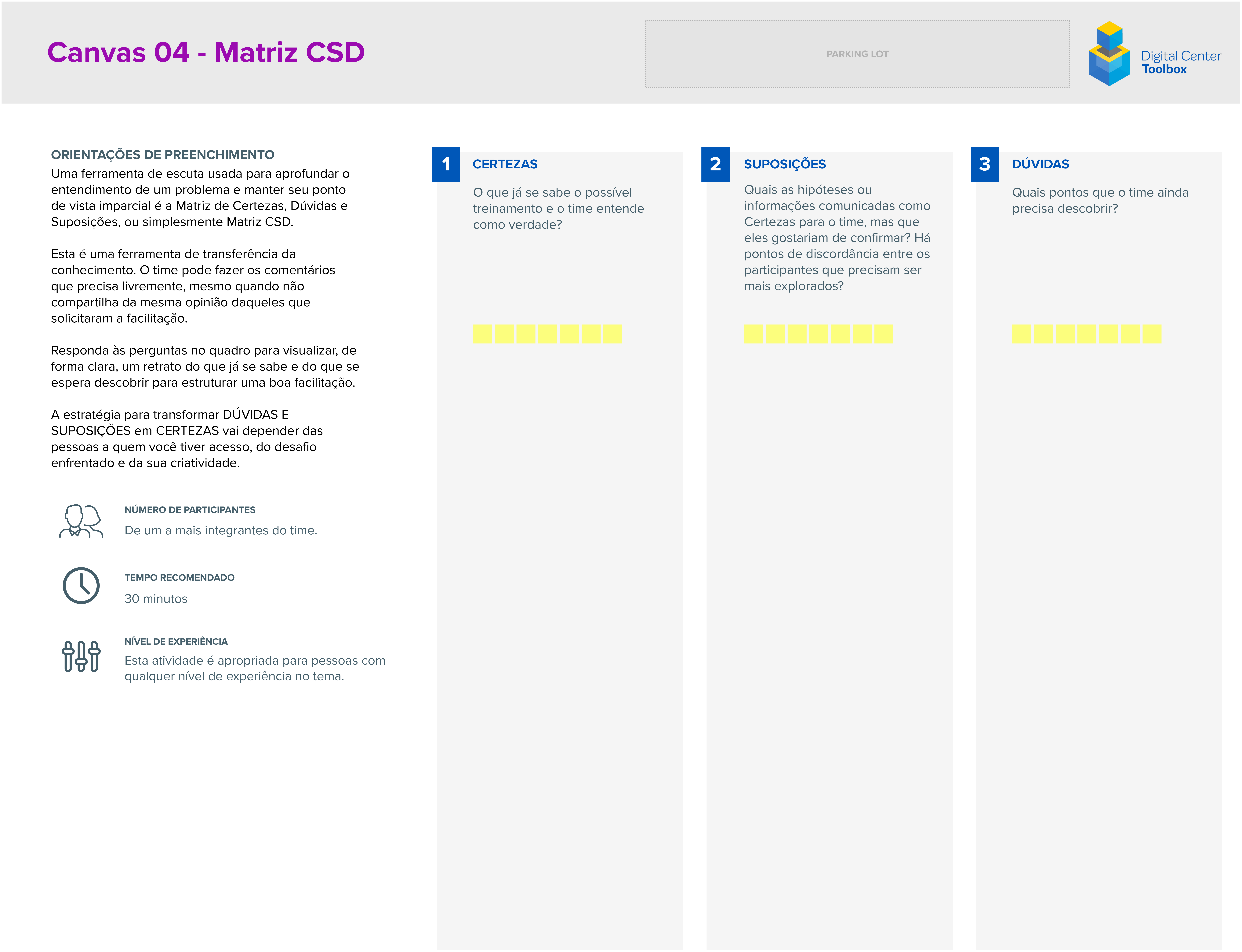
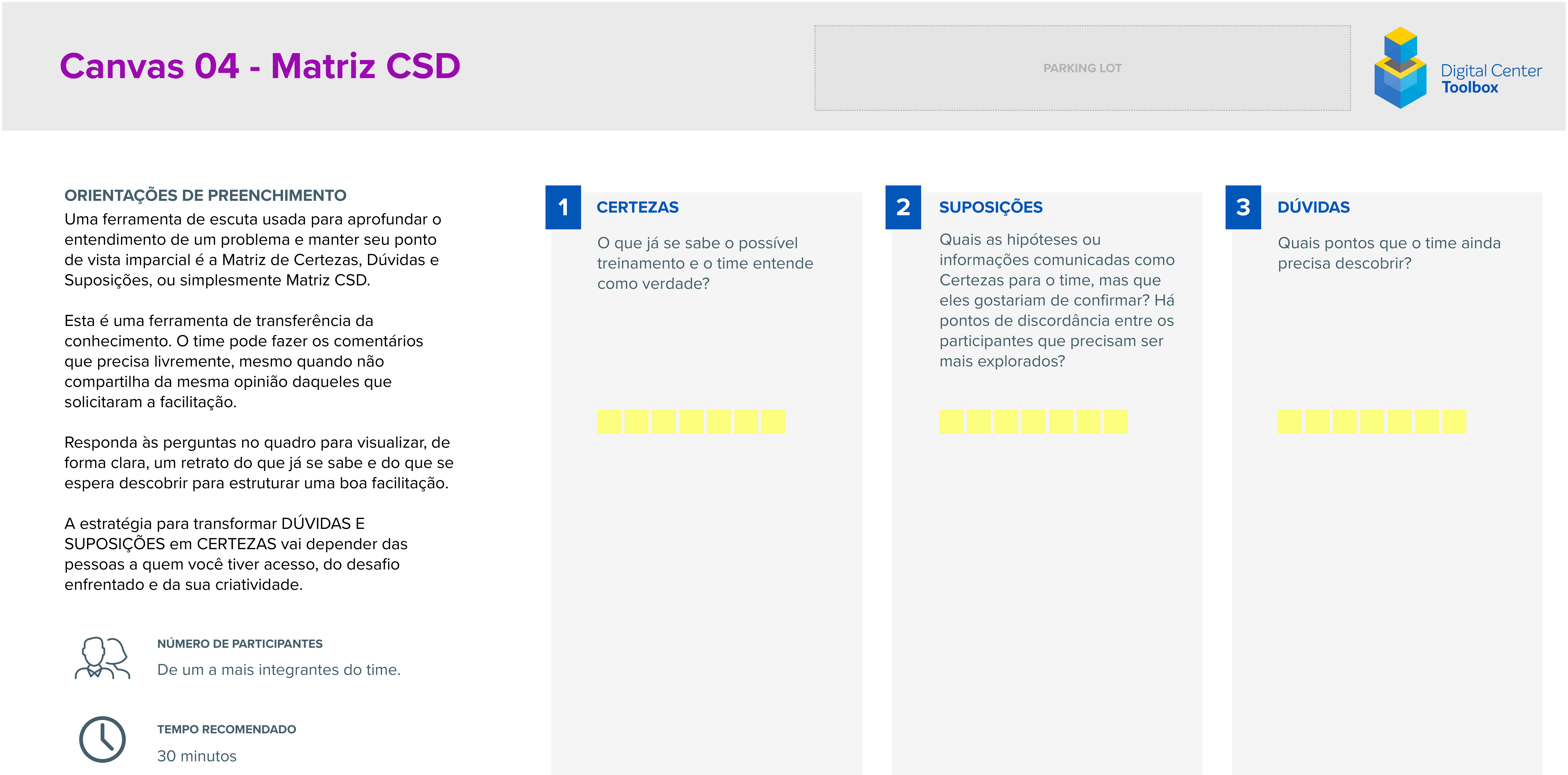
  • Canvas 04, CSD Matrix: separates what the team already knows for certain from what's still assumption or open question.
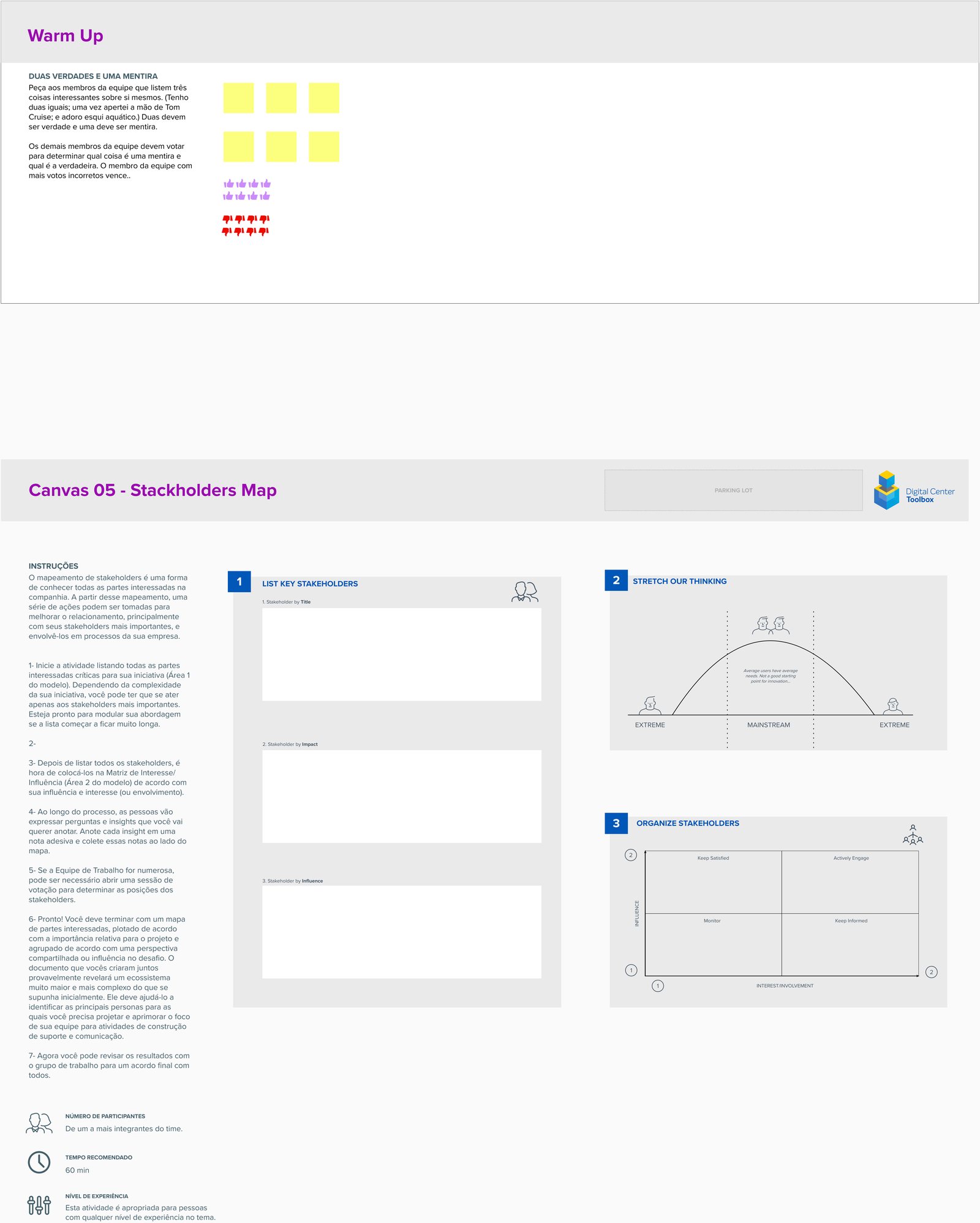
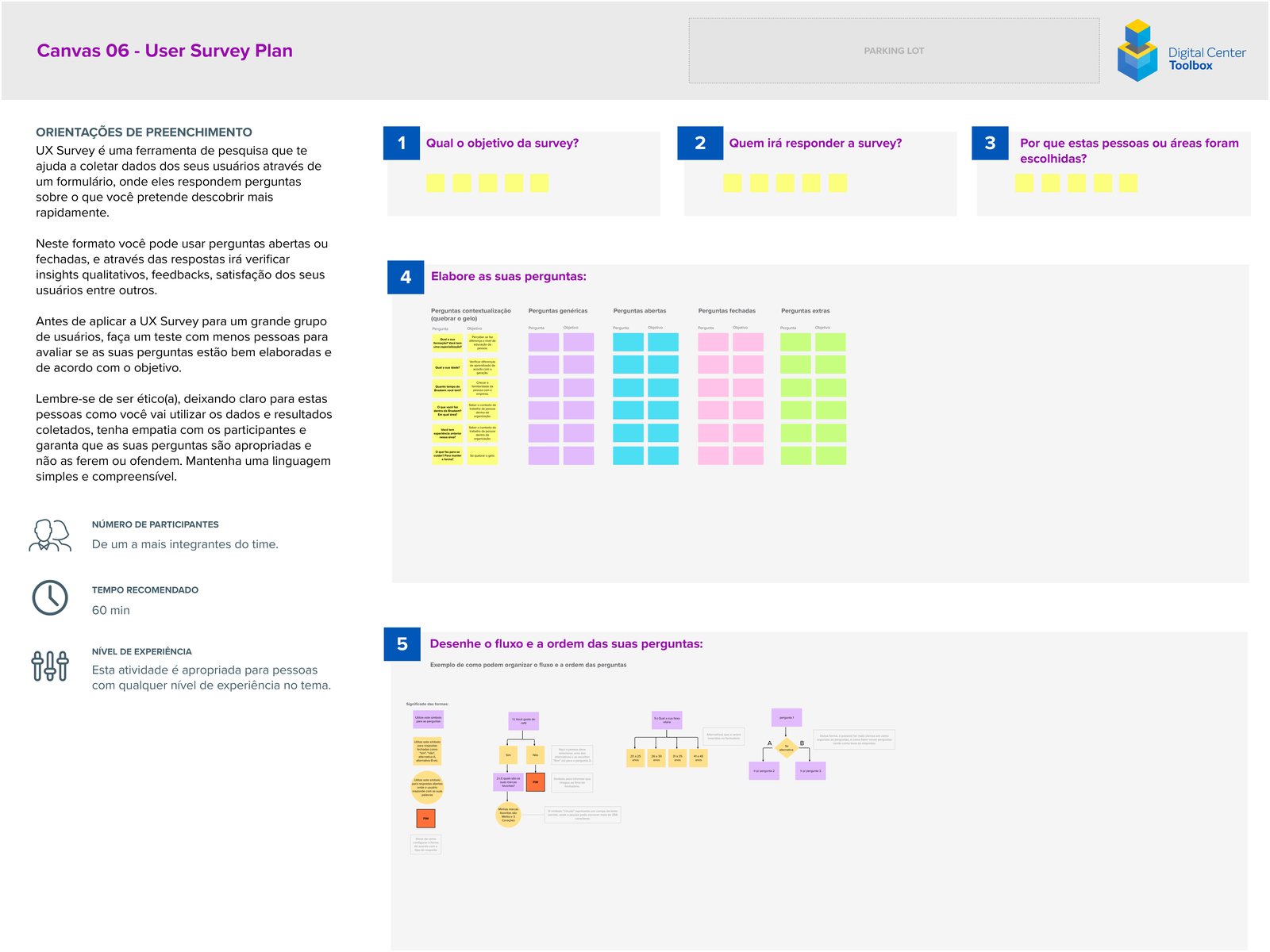
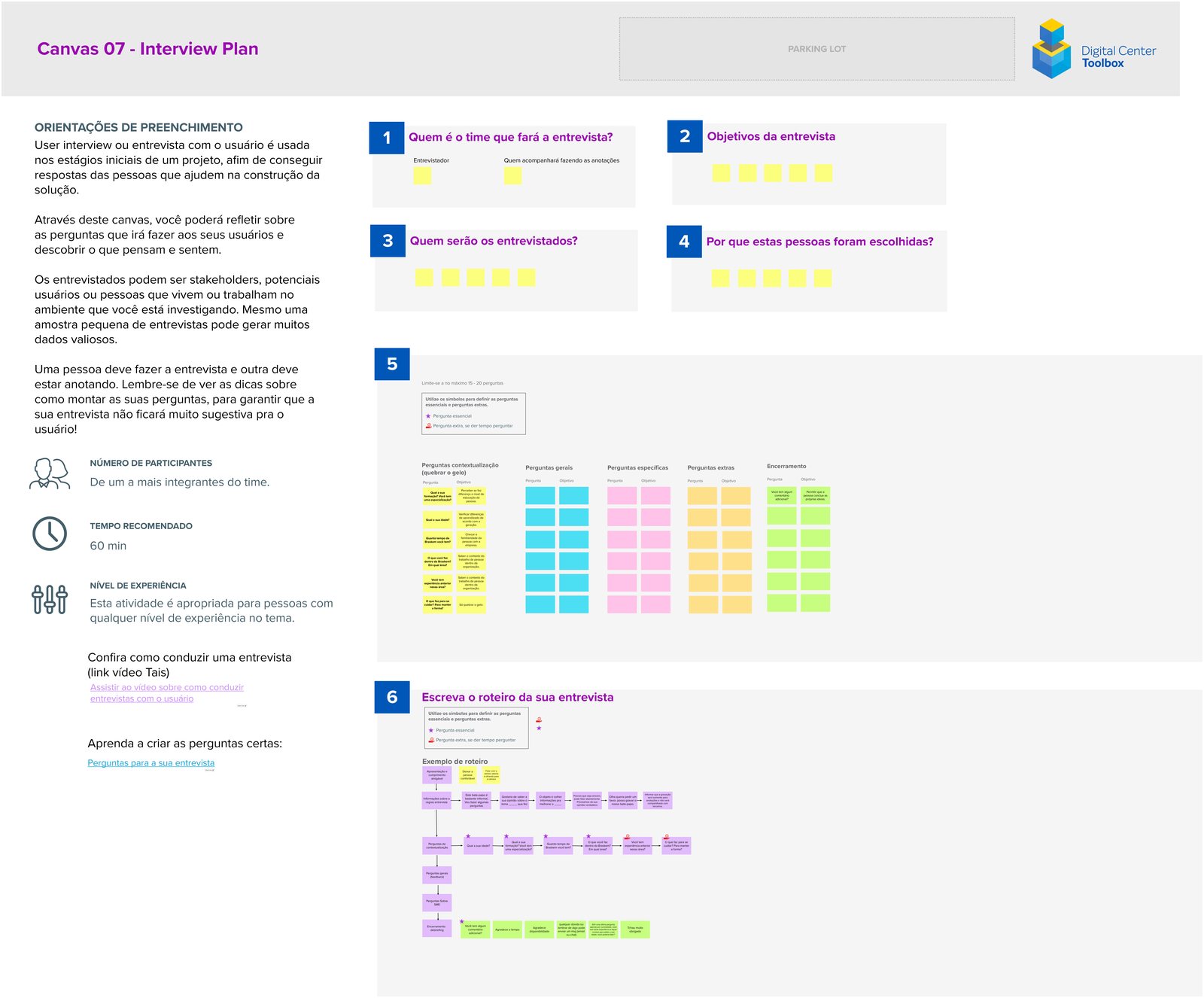
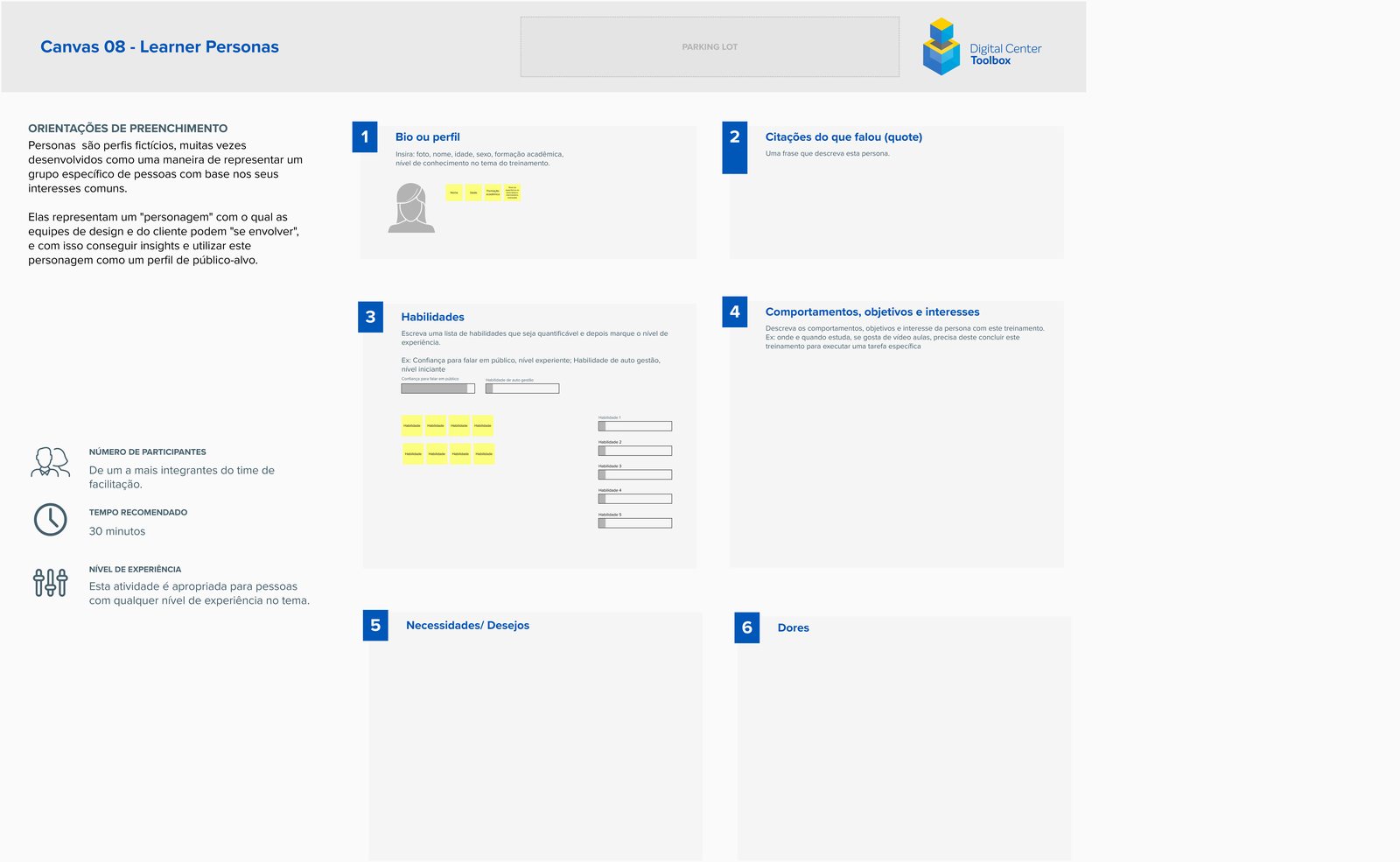
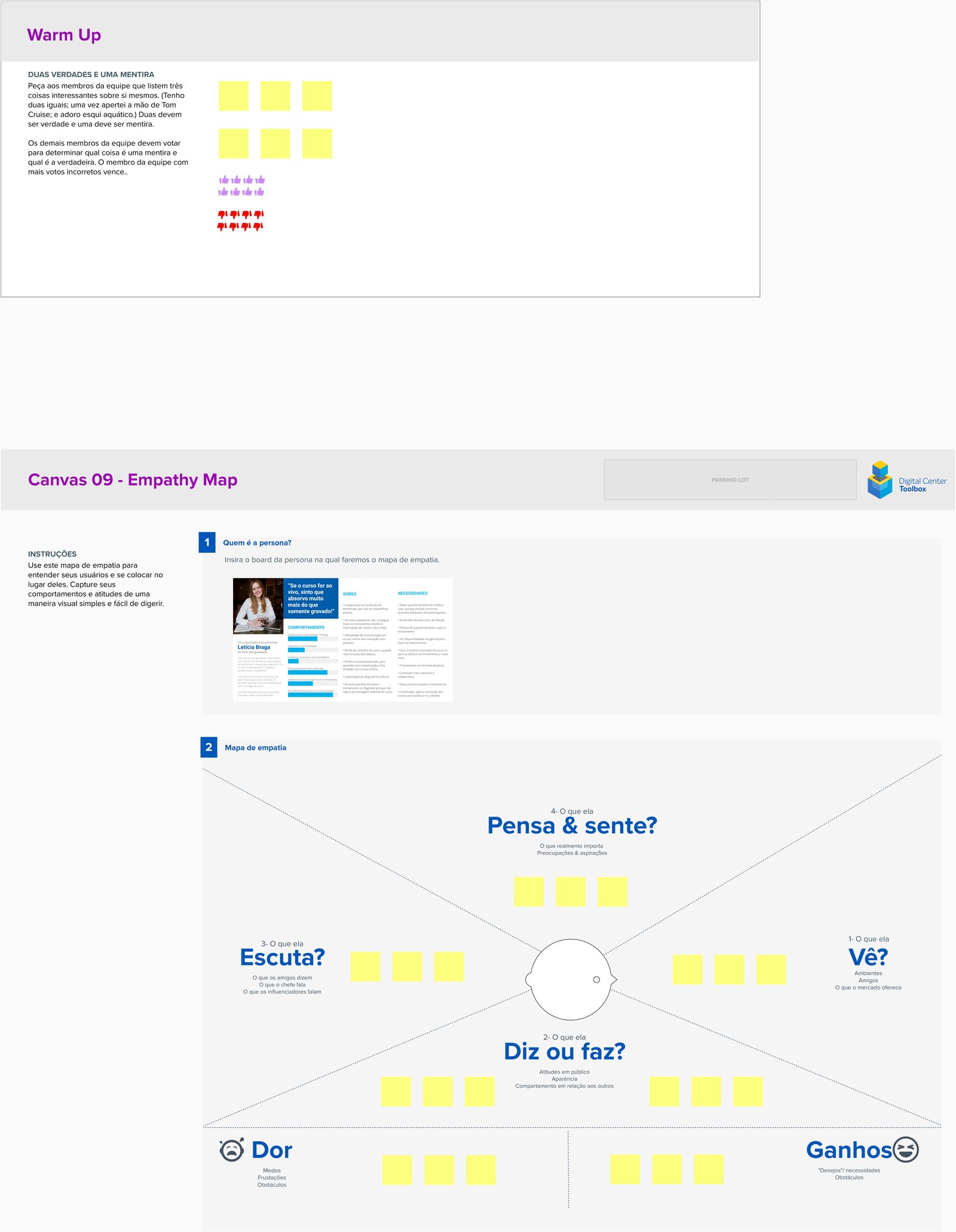
  • Canvas 05 to 09: map stakeholders, then run the learner survey and interviews (Canvas 06, Canvas 07). Responses get tabulated and turned into learner personas (Canvas 08) and empathy maps (Canvas 09), so the training gets built for who's actually taking it, not assumptions about them.

The survey and interviews for the pilot reached 14 people at Braskem, split evenly by gender and mostly between 26 and 45 years old. That data first produced two draft personas; the Product Manager then decided to consolidate them into one, Leticia, so the training had a single, sharper profile to design for rather than two competing ones.

2. Design the Complete Experience. Ideate the learning journey (Canvas 10), then prototype and test it (Canvas 11) before anything gets built.

3. Deliver for Application. Develop the training content, then distribute and promote it internally.

4. Evaluate for Continuous Improvement. Analyze and report results, then gather and analyze learner feedback (Canvas 12) to iterate on the training.

Each canvas runs as a workshop of roughly 2 hours. Run end to end, the 12 canvases add up to about 24 hours of structured work, from a bare training request to a brief the instructional designer can start writing content from.

I scoped and validated phases 1 and 2 in full, including the Understanding-the-Problem and Empathizing sub-phases that feed them. Distributing and promoting training (phase 3.2) and analyzing results (phase 4.1) were left for Braskem's Enablement team to define on top of the framework, since they depend on that team's own channels and reporting; the framework hands off a validated CSD Matrix, personas, empathy maps and a tested learning journey, not a shipped LMS course.

Browse the framework's design canvases

All 12 canvases that make up the Training Design Method, from research planning through to journey mapping.

Canvas 01: Strategy Blueprint

Canvas 01, Strategy Blueprint, the first tool in the Training Design Method Framework

Canvas 02: SME Mindmap

Canvas 02, SME Mindmap, used to map the subject-matter expert's knowledge before designing a training module

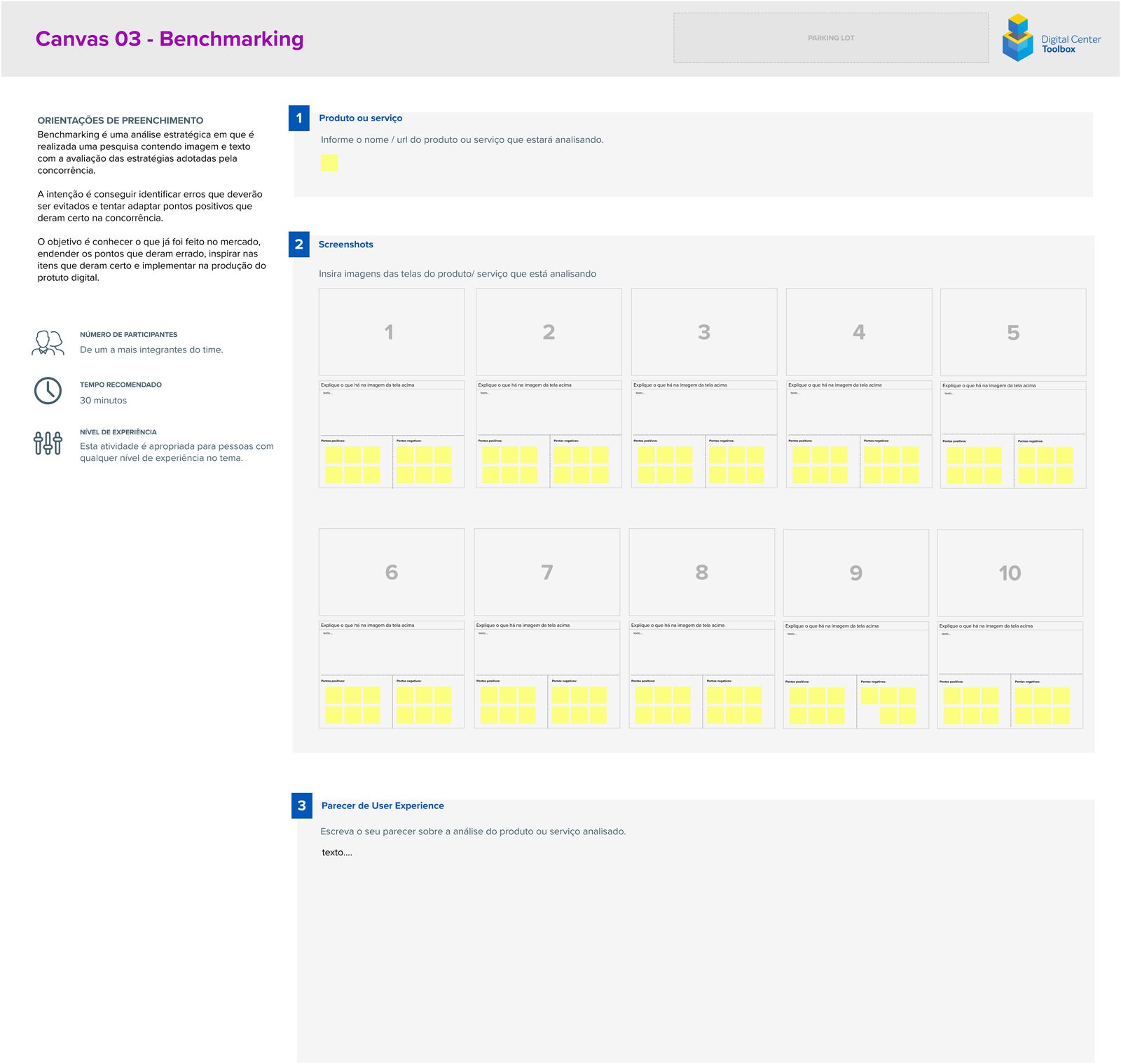
Canvas 03: Benchmarking

Canvas 03, Benchmarking, a structured template for comparing existing products or services before designing a training

Canvas 04: CSD Matrix

Canvas 04, CSD Matrix, used to separate certainties, assumptions and open questions before designing a training

Canvas 05: Stakeholder Map

Canvas 05, Stakeholder Map, used to list and prioritize stakeholders by interest and influence

Canvas 06: User Survey Plan

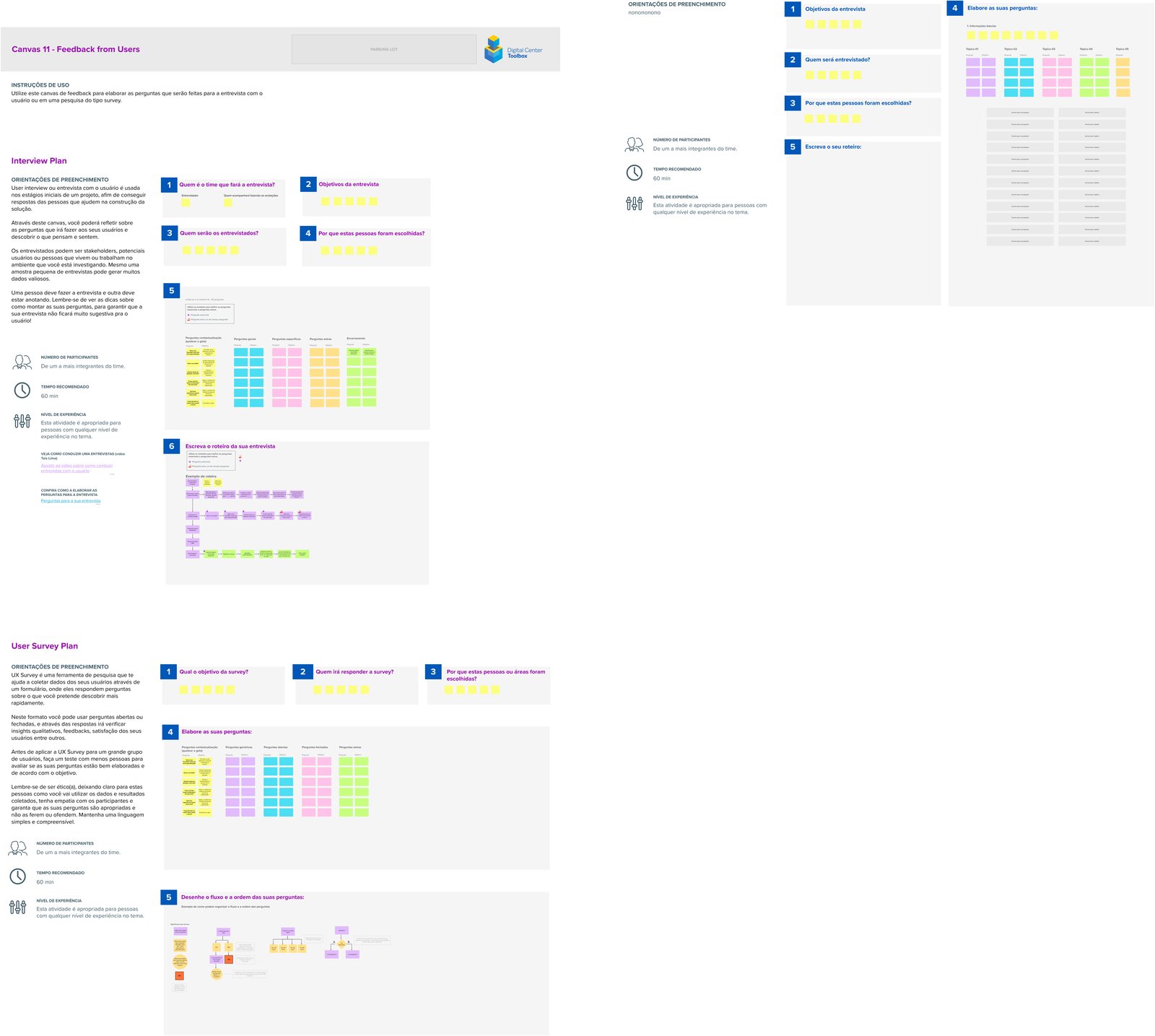
Canvas 06, User Survey Plan, a template for defining survey goals, audience and question flow

Canvas 07: Interview Plan

Canvas 07, Interview Plan, a template for defining interview goals, participants and question script

Canvas 08: Learner Personas

Canvas 08, Learner Personas, a template for profiling a training program's target learners

Canvas 09: Empathy Map

Canvas 09, Empathy Map, used to capture a learner persona's behaviors and attitudes in a simple visual way

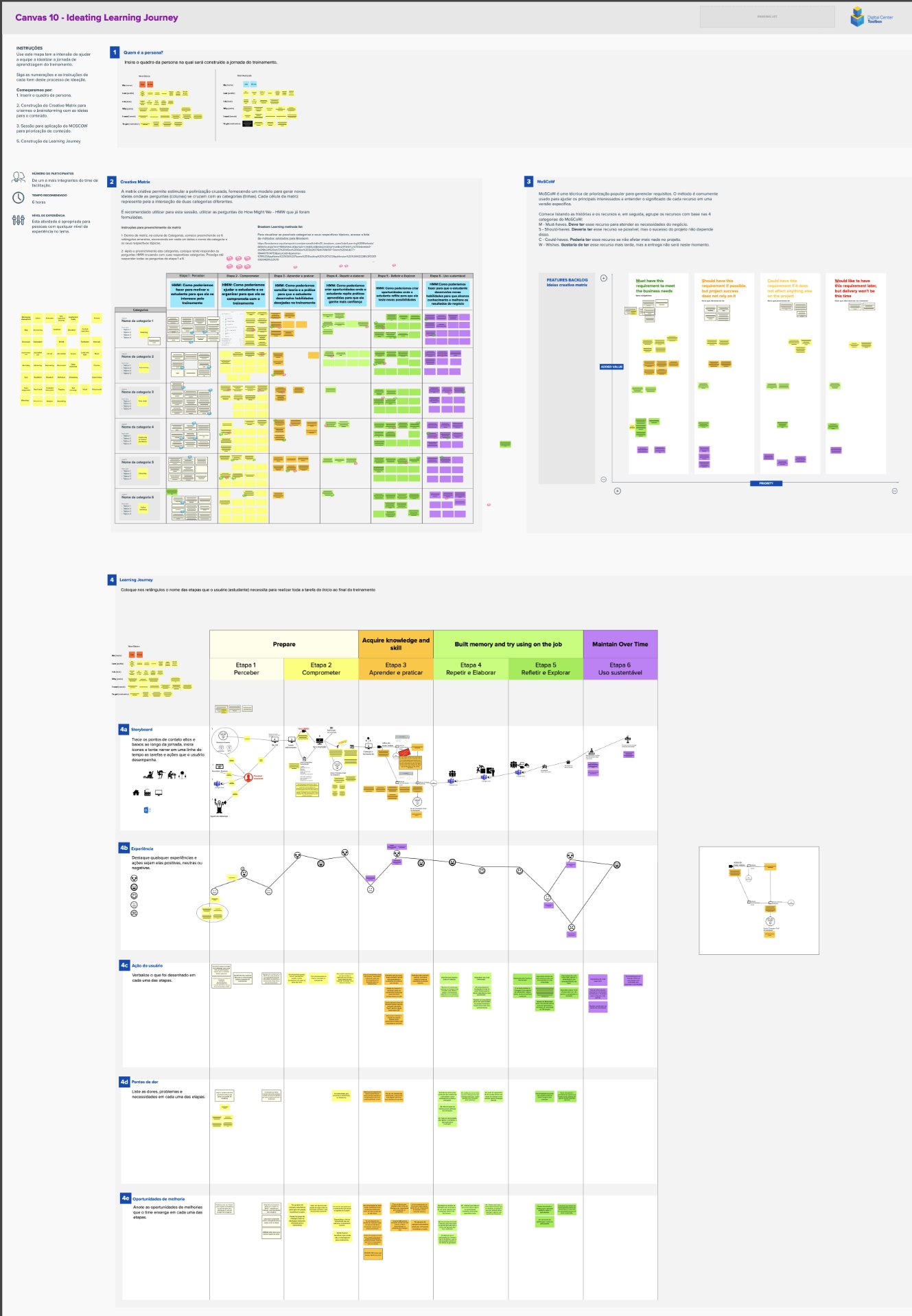
Canvas 10: Ideating Learning Journey

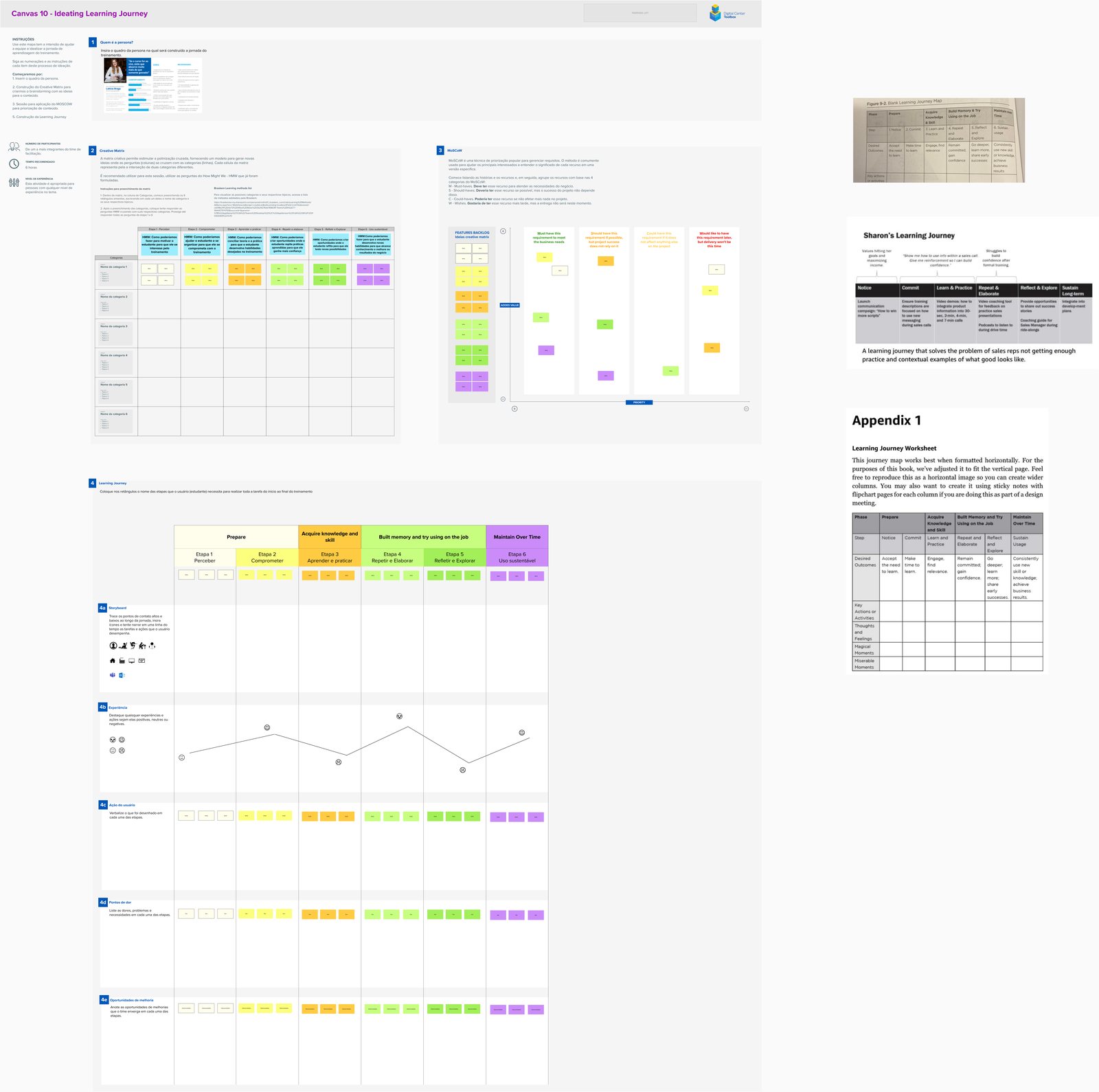
Canvas 10, Ideating Learning Journey, combining a Creative Matrix, MoSCoW prioritization and the learning journey map

Canvas 11: Feedback from Users

Canvas 11, Feedback from Users, used to plan how the team would learn trainees' opinions, difficulties and successes after going through the training

Canvas 12: User Journey

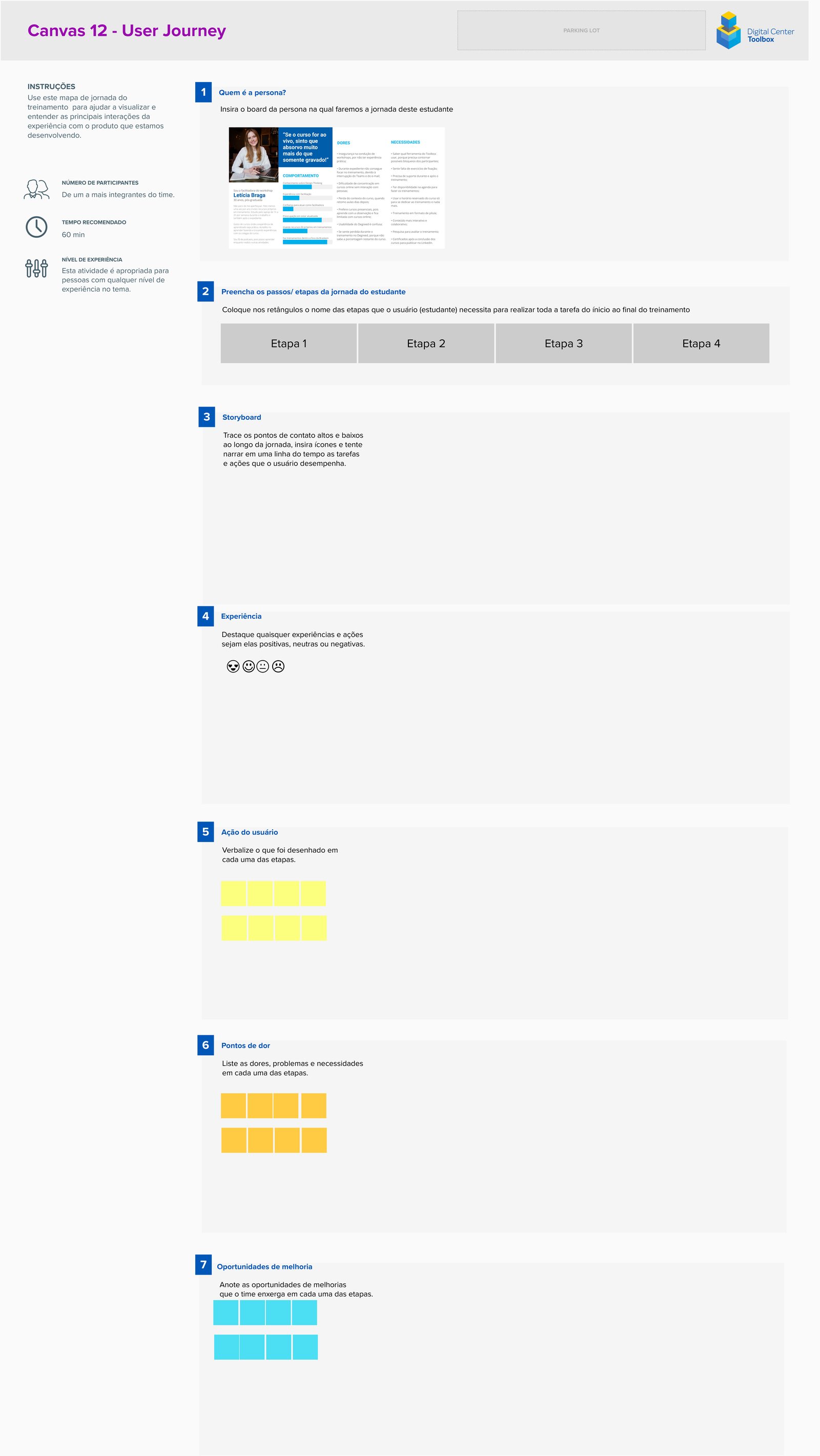
Canvas 12, User Journey, mapping the learner's experience across the training to identify improvement opportunities
Canvas 04, CSD Matrix, used to separate certainties, assumptions and open questions before designing a training

Conflict and Decision

The problem, options considered, and strategic choice

Conflict

Braskem's instructional team had no structured way to turn what a subject matter expert knows into a training program that actually fits how learners work. Each course was built ad hoc, so the outcome depended entirely on who happened to run that project.

That person was rarely a trained Product Manager. At Braskem, whoever originates a project ends up leading it in a PM like role, without formal PM training. Most had never worked with a structured design method before, so a large part of the job was teaching the method itself, and every one of these informal PMs handled that differently: some were open to it, others were not always receptive to constructive feedback on how their project should run.

This came to a head during the pilot, when the project's informal PM pushed to run the workshops entirely on the team's own terms, nearly pulling the pilot away from the framework's structure. I raised it privately with the manager rather than pushing back in front of the group: "you know when you hold your hand and people want your arm? So, in private, I talked to the manager, and I said there are times when we need to take the reins, so it doesn't become a mess."

Conscious Trade-off

Sacrificed: Speed on the pilot project itself. Running the method properly, sitting with the SME, mapping stakeholders, interviewing and surveying learners, building personas and empathy maps, took a long cycle end to end.

To gain: A repeatable, teachable method. The goal was never to ship one training fast, it was to hand the instructional team a process they could run again on their own.

Reasoning: Based on the book Design Thinking for Training and Development (Boller & Fletcher, ATD), I adapted the Design Thinking stages into a four-phase framework with a canvas for each step, so the instructional team would have a concrete tool, not just a philosophy, to work from.

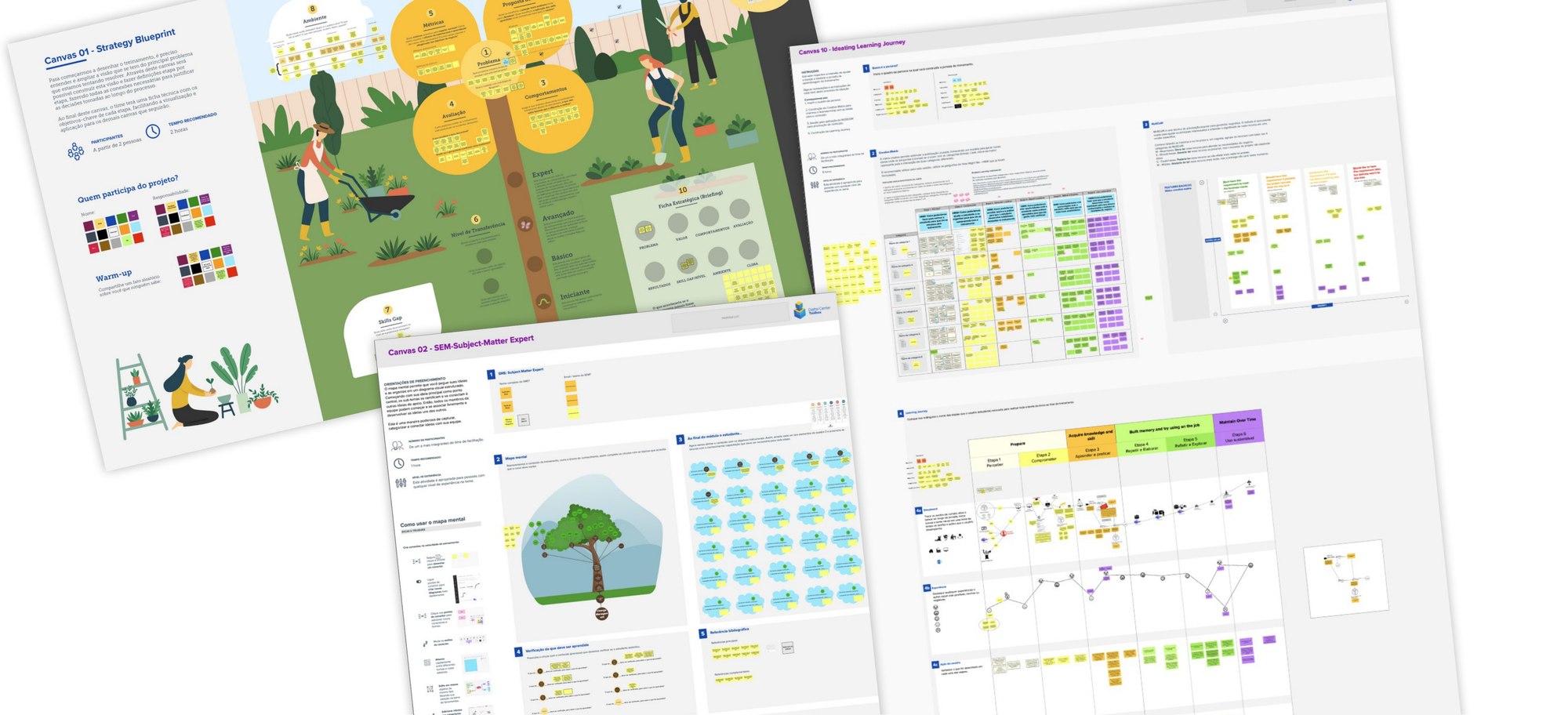
A composed view of the pilot's filled-in canvases: Strategy Blueprint, SME Mindmap and Ideating Learning Journey

Evidence and Results

Data, methodology and learnings

Success Proxy

The clearest proxy for success was handoff, not a survey score: the Change Management team ran the pilot with me, then used the resulting artifacts (personas, empathy maps, learning journey) to build and launch their own training with no further design involvement from me. Recorded workshop sessions and pilot meetings document that transfer.

I moved to another client shortly after the pilot wrapped, so I don't have adoption numbers for teams beyond Change Management, or learner satisfaction data from trainings built with the method after that.

Proof from the Pilot

These are the actual canvases filled in during the Change Management pilot, not blank templates: the Strategy Blueprint that scoped the project, the SME Mindmap that captured the subject-matter expert's knowledge, and the Ideating Learning Journey that the team used to build its own training.

Canvas 01: Strategy Blueprint (filled in during the pilot)

Canvas 01, Strategy Blueprint, filled in with the Change Management team during the pilot

Canvas 02: SME Mindmap (filled in during the pilot)

Canvas 02, SME Mindmap, filled in with the Change Management team during the pilot

Canvas 10: Ideating Learning Journey (filled in during the pilot)

Canvas 10, Ideating Learning Journey, filled in with the Change Management team during the pilot

Risk Mitigation

To make the method something the instructional team could actually pick up and run, not just a diagram handed over to them:

  • A canvas per step: every phase of the framework has a ready to use canvas (Stakeholder Map, CSD Matrix, Learner Personas, Empathy Maps, Learning Journey, and more), each with its own instructions, recommended duration, and participants.
  • Piloted before documented: the framework was tested end to end on a real training project before being written up as a method, so every step reflects something that actually worked in a live workshop.
  • Run with the team, not for the team: I facilitated the pilot alongside the Change Management team instead of producing the training for them, so the handoff happened during the process itself.

Measurable Results

Deliverables:

  • A complete four-phase Training Design Method Framework, from defining desired outcomes to evaluating for continuous improvement
  • 12 ready to use canvases, each documented with purpose, participants, and recommended duration
  • A validated pilot: the Change Management team's training, built by that team from the framework's artifacts
  • Recorded workshops and pilot sessions kept as onboarding material for future teams running the method

What Got Worse

During the pilot:

  • Near loss of control of the process: the project's informal PM pushed to run the workshops entirely on the team's own terms, resolved privately with the manager rather than in front of the group (see Conflict, above).
  • A long cycle: running every canvas end to end, from stakeholder mapping to the final learning journey, made for a rich but extremely long process.

Learning: some sessions can run asynchronously instead of requiring the whole team in the room at once, and there is clear room to shorten the overall cycle without losing what makes each canvas useful.

Would Do Differently Today

The method itself is a human process. Sitting with the SME and extracting what they know is exactly what makes the framework work, and that part should stay human. But I already used AI, in a fairly basic way compared to what is available today, to help analyze the survey and interview data for this project. With today's tools I would go further:

  • An AI agent for meeting transcripts: interpreting the SME and stakeholder session recordings to surface the outcomes that matter, instead of processing every transcript by hand.
  • An AI agent to read the canvas artifacts: extracting the output of all 12 canvases into a structured markdown file the instructional designer could write from directly, instead of manually organizing the training structure from workshop notes.
  • A short explainer video of the method: making the framework easier to introduce and breaking the ice with stakeholders in the first session, instead of relying only on a live walkthrough.

Full Case Study

The complete framework, canvases, and pilot evidence in detail

Open full view ↗