Prudential - B2B SaaS Life Insurance Platform

Sticky notes on a board representing immediate impact and quick insights

Immediate Impact

Insurance proposal issuance accelerated by 63%

Reduced insurance proposal cycle from 30 to 11 days through standardized UX across Itaú Bank, BTG, and XP Investments | Eliminated 15% losses due to inconsistency | +18% profitability via shared Design System.
-15%
Losses Due to Inconsistency Eliminated
+18%
Profitability Increase
10
Personas Created
11 days
Average Issuance Cycle
Chess pieces in conflict representing strategic decision-making

Conflict and Decision

The problem, options considered, and strategic choice

Conflict

When Prudential opened in Brazil, the sales insurance platform was a straight translation of the U.S. legacy system into Portuguese, with little adaptation to Brazilian insurance rules or how local reps actually sold. Reps struggled just to get through a proposal.

On top of that, Prudential faced fragmented and inconsistent journeys in selling individual insurance through bank partners (Itaú, XP, BTG). The lack of UX standardization was causing:

  • 15% of identified losses due to inconsistencies in sales flows
  • Different experiences for the same product across different partners
  • Low scalability - each new partner required custom development
  • Difficulty in measuring and optimizing conversion in a unified way

Team Setup

Discovery, Define, and Ideation ran as one team: me and one other senior product designer. Once we moved into execution, two Product Owners joined and we split the build in two. I owned the Electronic Proposal end to end with one PO, while my counterpart took the dashboards and proposal status tracking with the other.

Options Considered

  1. Deep customization per bank partner

    Discarded: Very low scalability, unsustainable maintenance cost, impossible to standardize metrics

  2. Single generic template without personalization

    Discarded: Partner resistance, loss of brand identity, low expected adoption

  3. (Chosen): Shared and flexible Design System with modular components

    Selected: Balance between consistency and flexibility, scalable, reusable components

Conscious Trade-off

  • Sacrificed: Extreme customizations and deep personalization that some partners wanted for their specific experiences.
  • To gain: Unified and consistent cross-partner experience, scalability for new partners, and ability to measure/optimize centrally.
  • Reasoning: In a B2B ecosystem with multiple partners, consistency is trust. End customers gain confidence when the experience is predictable, regardless of the entry channel.

The Decision: Modular Proposal Navigation

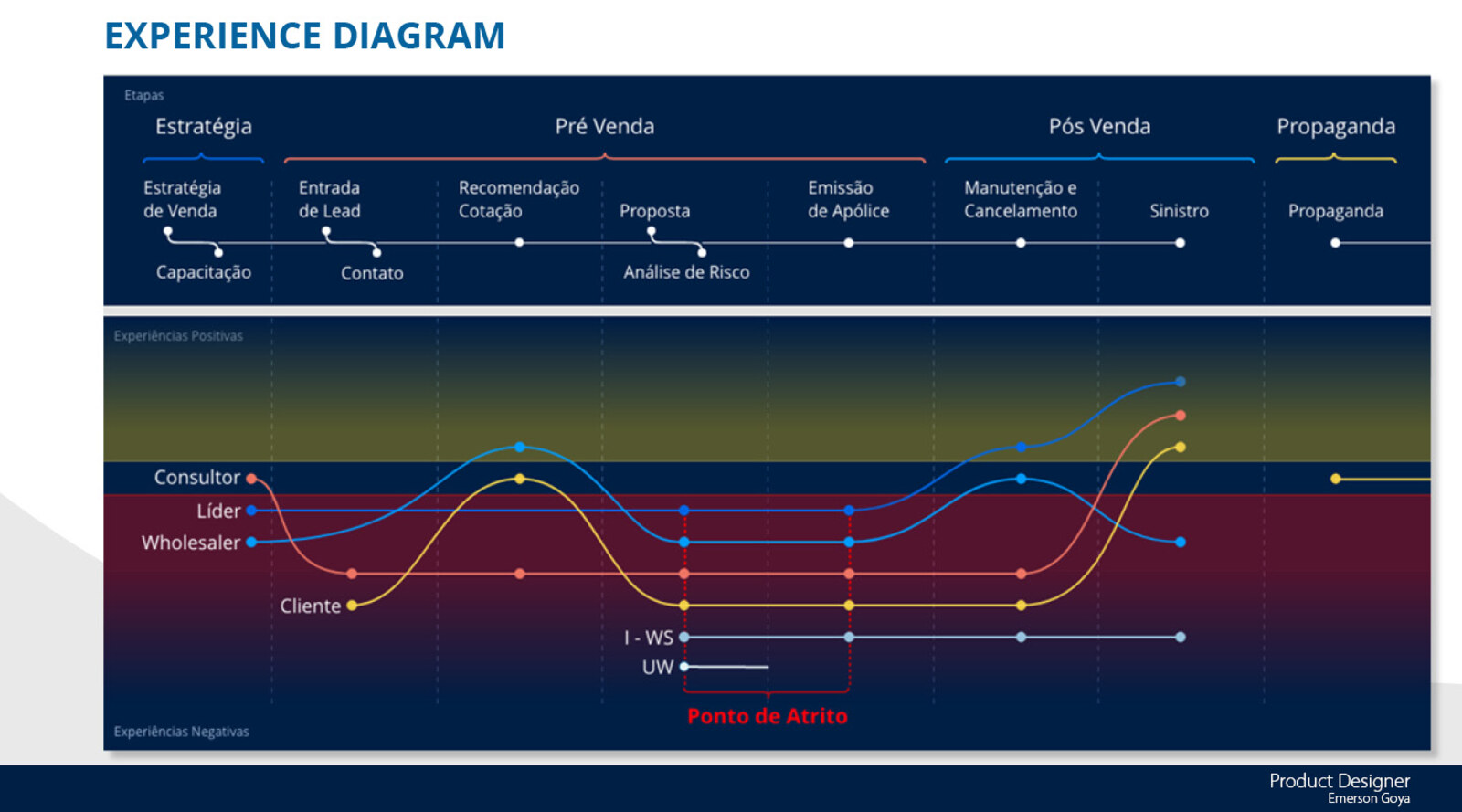
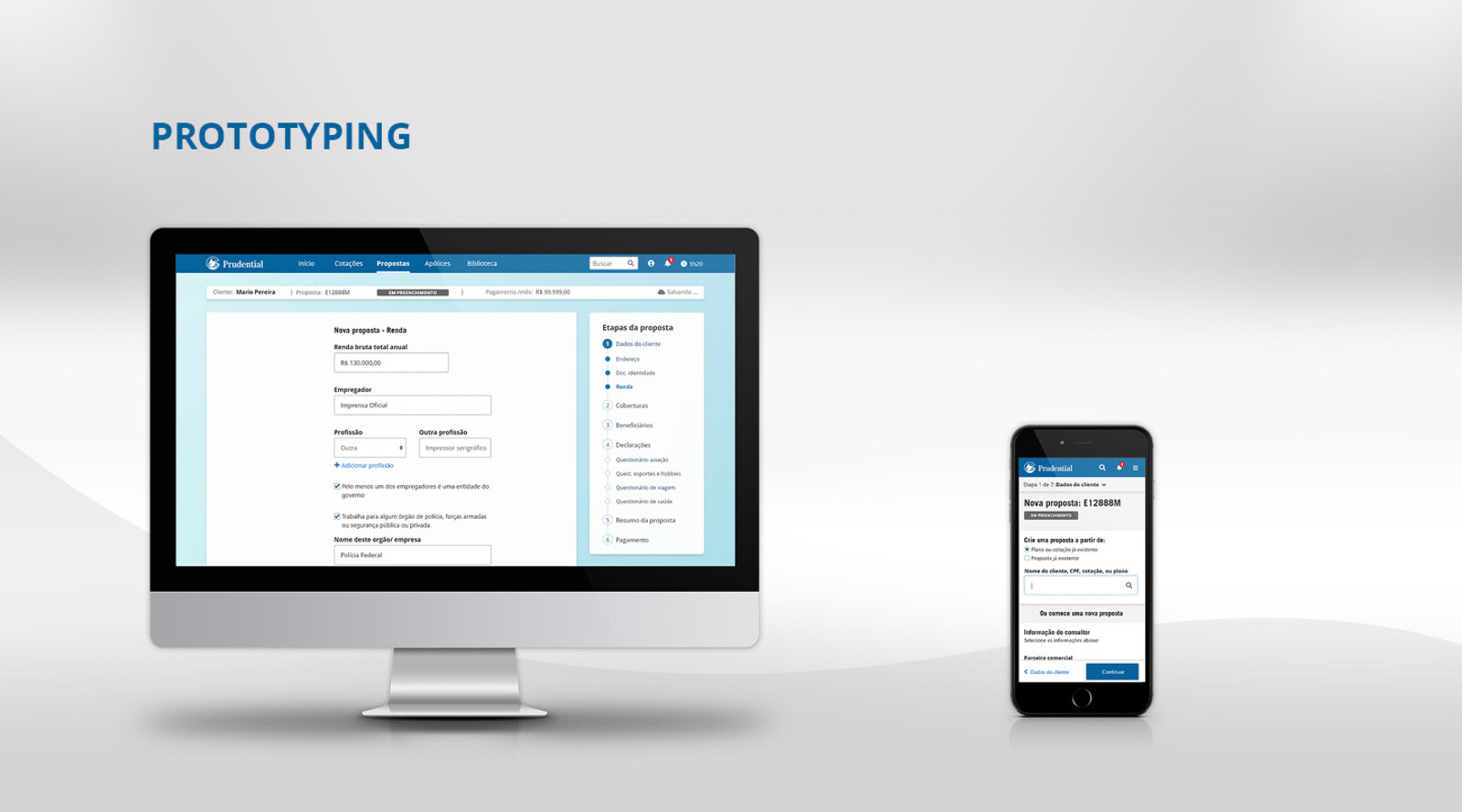
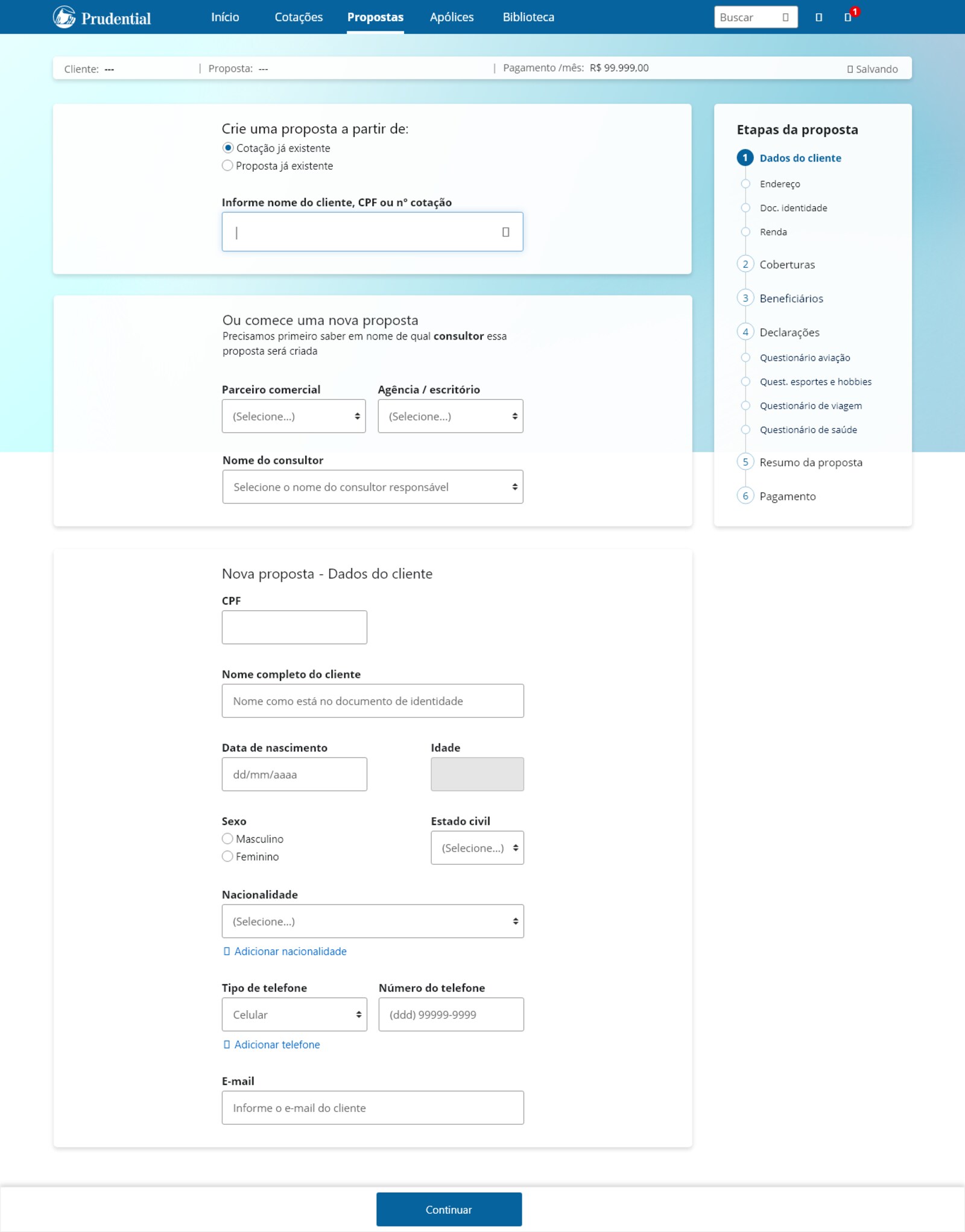
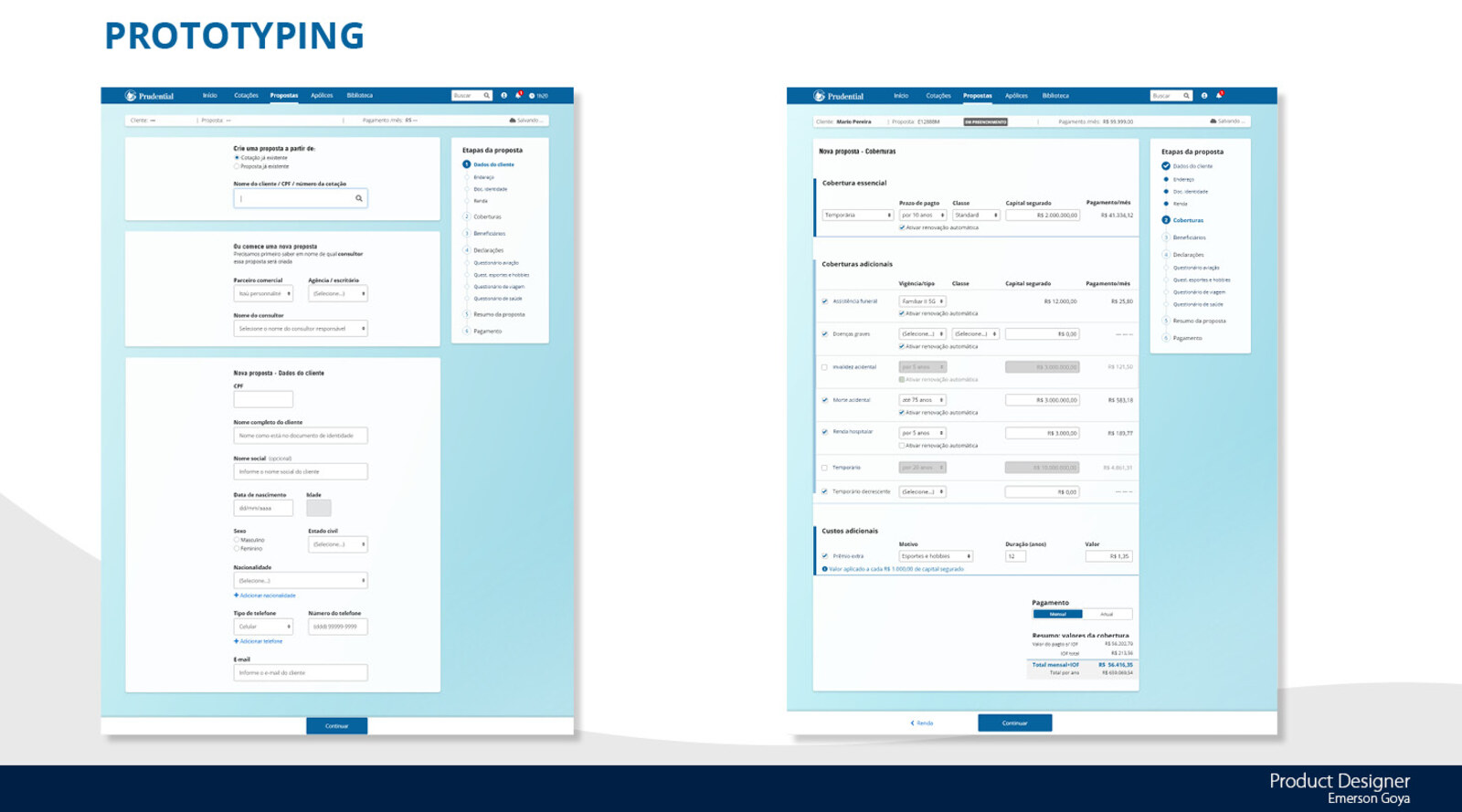
Reps kept having to jump back into a proposal mid-way through: chase a client for a missing document, then return to fix an earlier answer. A rigid step-by-step form made that painful. I designed a modular navigation instead (the "Etapas da proposta" sidebar in the prototype), so reps could move between sections freely instead of in a fixed order. It came straight out of the friction point we'd mapped in the experience diagram.

Team collaborating over UX research materials representing evidence and results

Evidence and Results

Data, methodology and learnings

Success Proxy

Initial mapping identified 15% of losses attributed to inconsistencies in journeys between partners. After implementing the shared Design System:

  • Reduction to <2% of losses due to UX friction
  • Onboarding time for new partners dropped from 4 months to 6 weeks
  • Average policy issuance cycle reduced to 11 days

Process Gallery

Discovery & research

Interviews, personas, journey mapping and the experience diagram behind the numbers above.

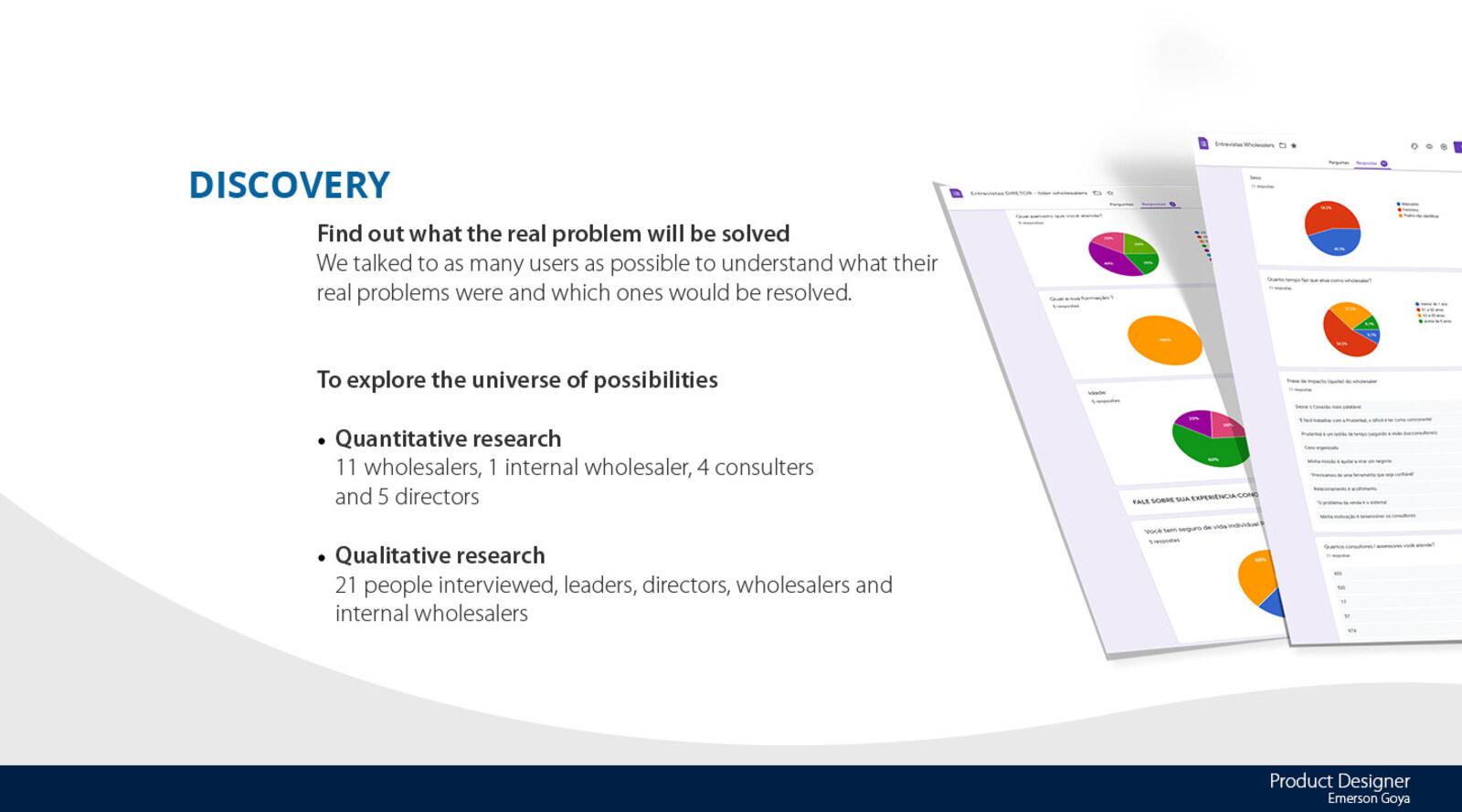
Discovery: Quantitative & Qualitative Research

Survey results from interviews with wholesalers, consultants and directors

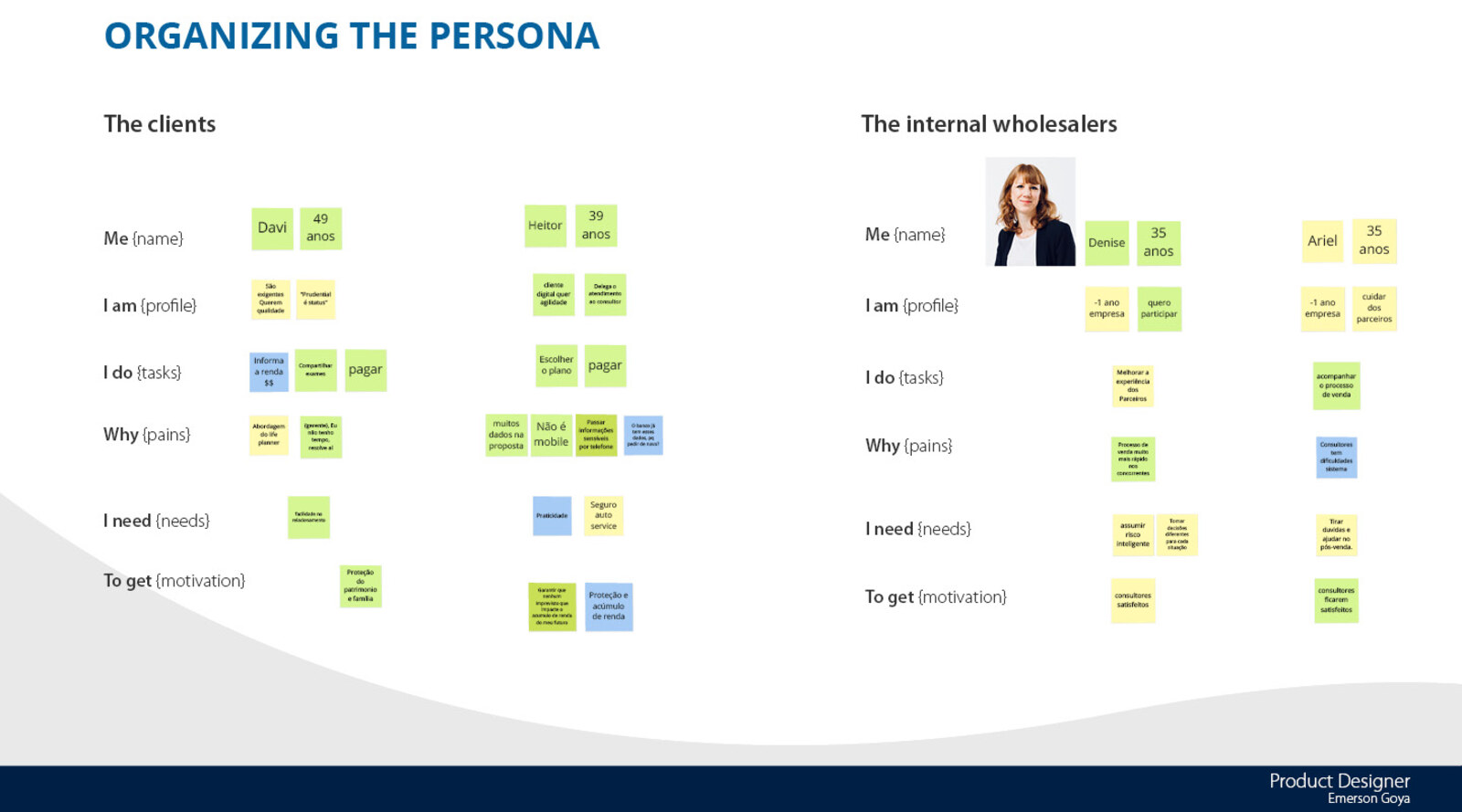
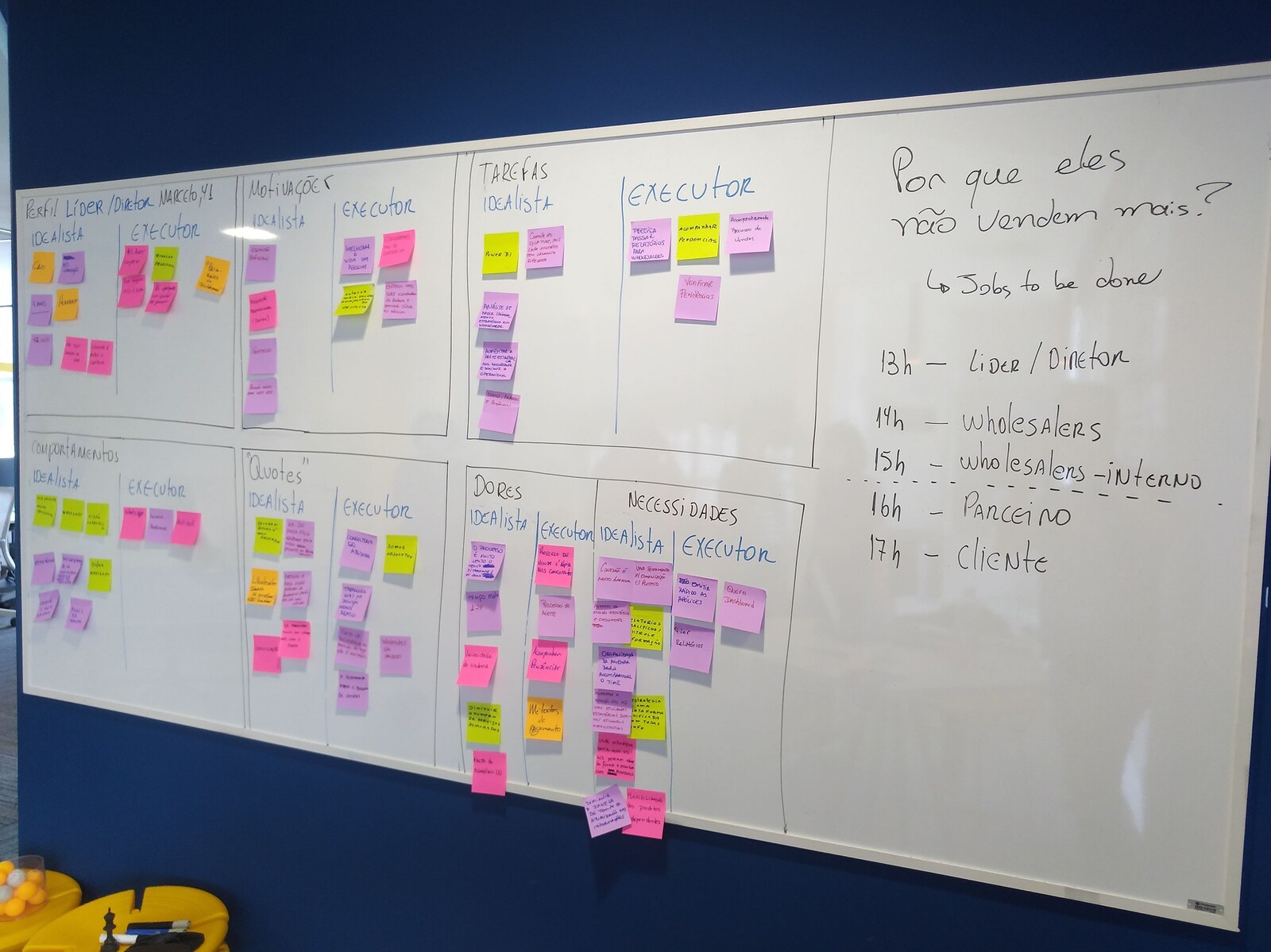
Structuring Client & Wholesaler Personas

Sticky note boards organizing research findings into client and internal wholesaler personas: name, profile, tasks, pains, needs and motivation

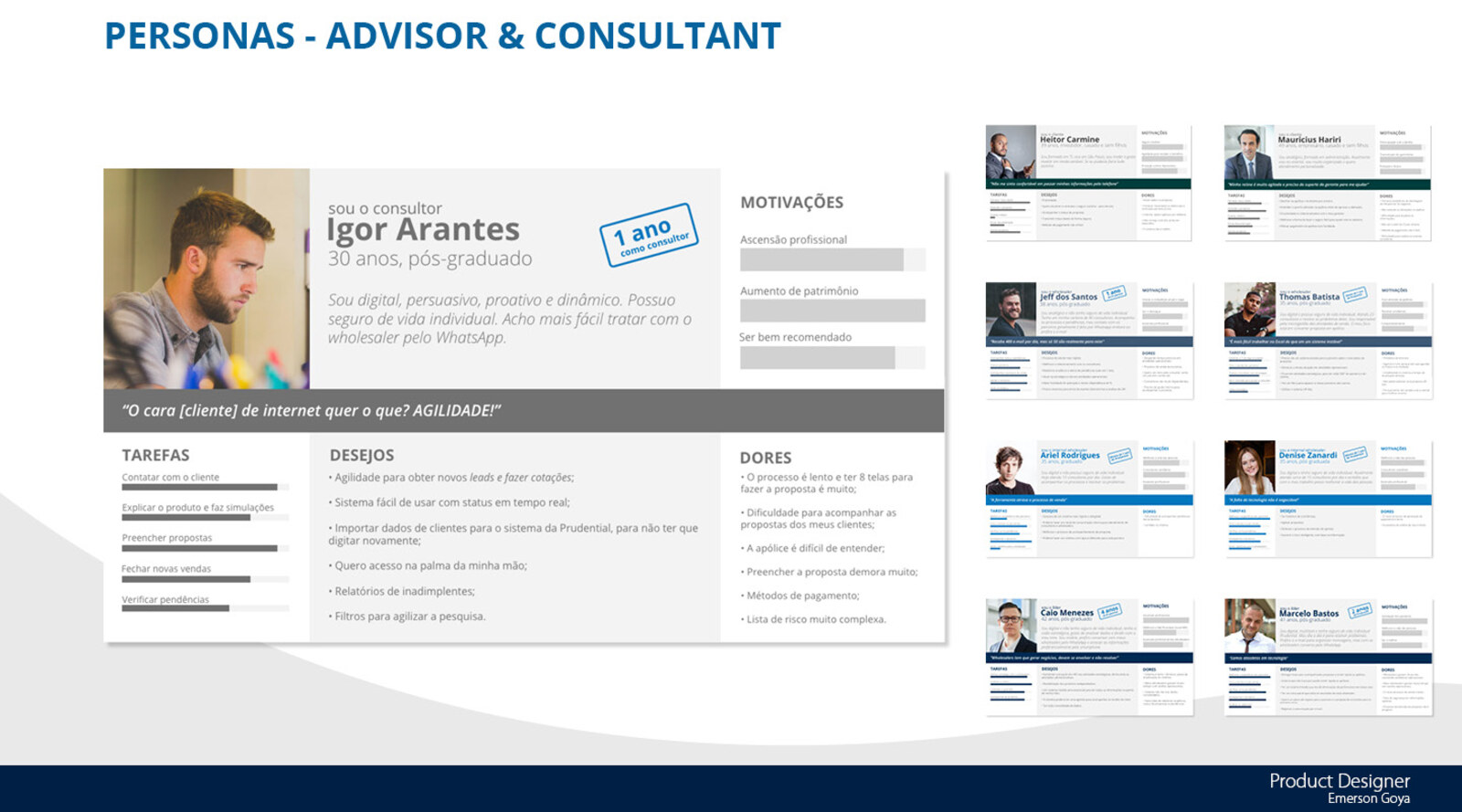
Advisor & Consultant Personas

Full persona boards designed for advisor and consultant profiles, with tasks, wishes, pains and motivations

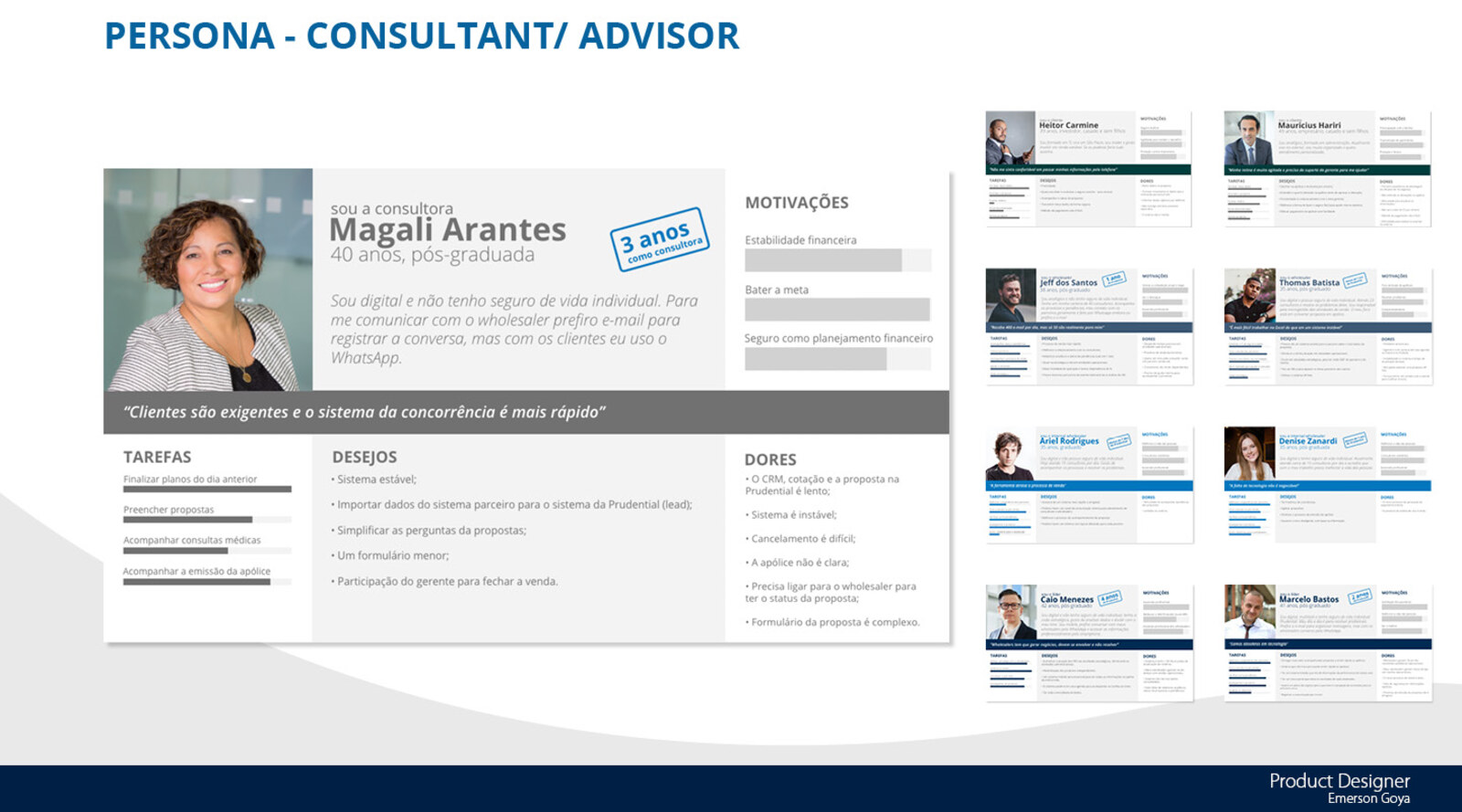
10 Personas Created

Full set of 10 advisor and consultant personas with tasks, wishes and pain points

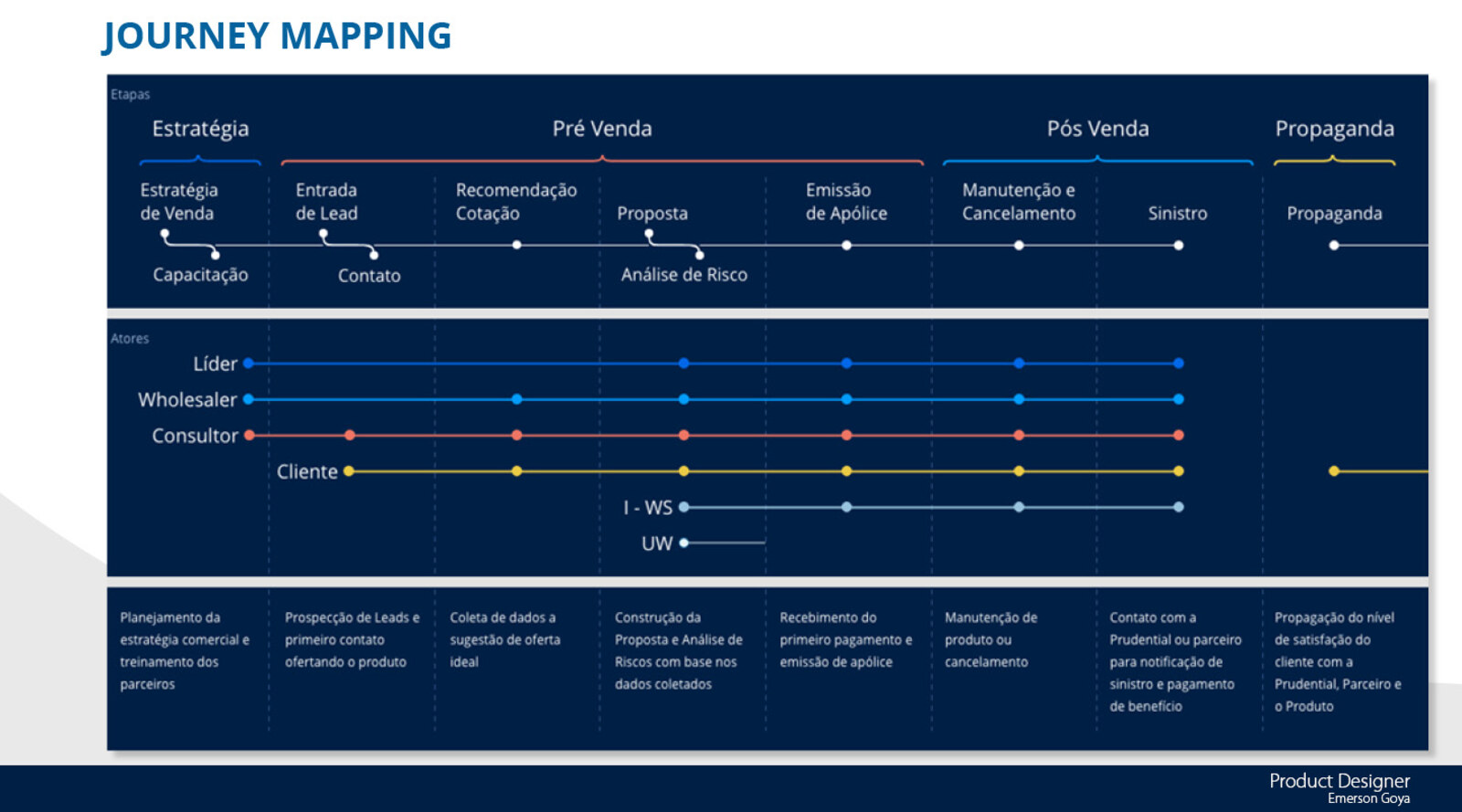
Journey Mapping: Strategy to Post-Sale by Actor

Journey map across the Strategy, Pre-Sale, Post-Sale and Branding stages, showing where the Leader, Wholesaler, Consultant, Client, Internal Wholesaler (I-WS) and Underwriter (UW) engage at each step

Experience Diagram: The Friction Point

Experience diagram plotting each actor curve from positive to negative experience across the journey, with every line dipping into the negative zone at Proposal and Policy Issuance, the friction point that indicated where to act first

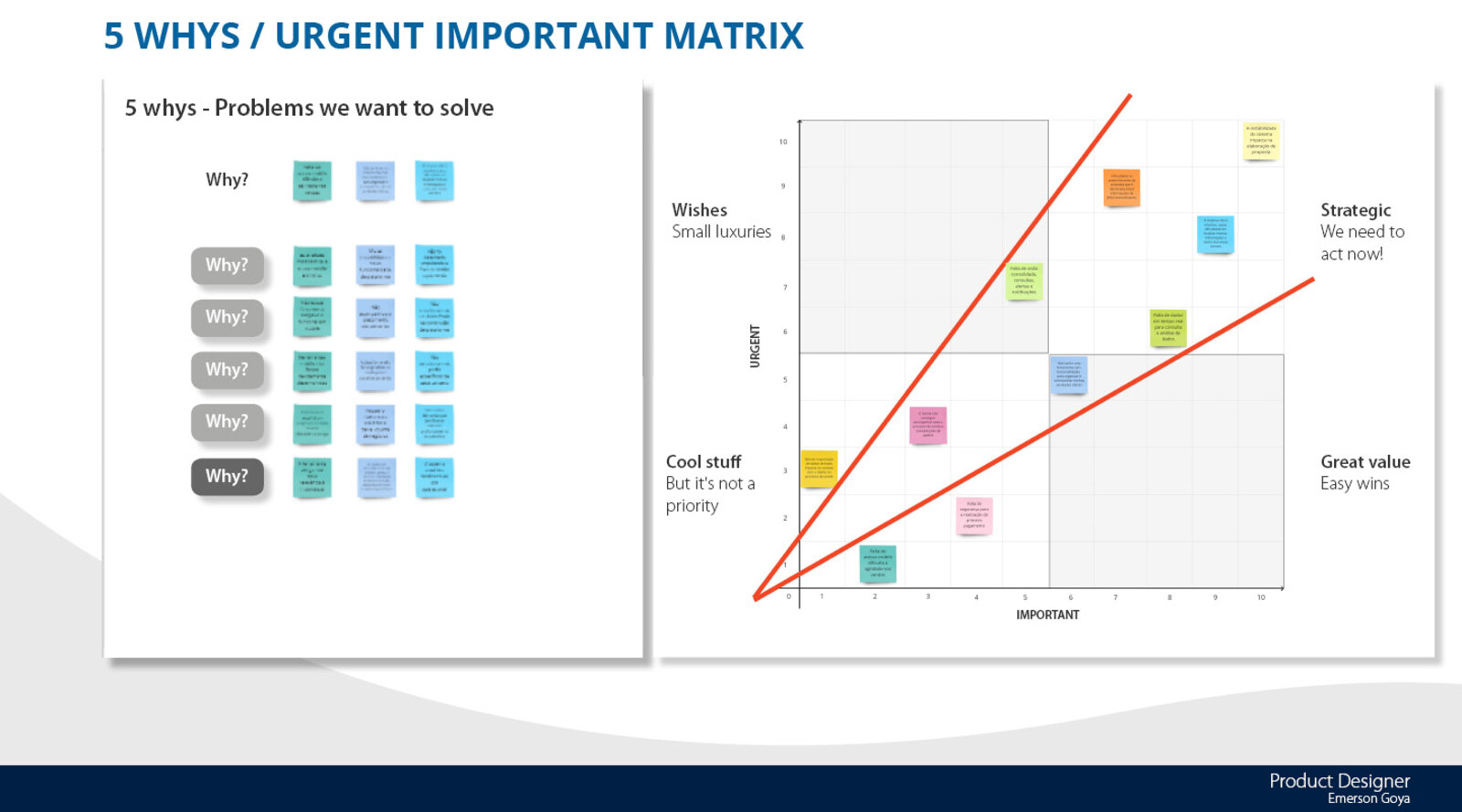
5 Whys Workshop & Eisenhower Matrix

5 Whys workshop to get to the root of each problem, plotted on an Eisenhower urgent-important matrix to decide what got built first

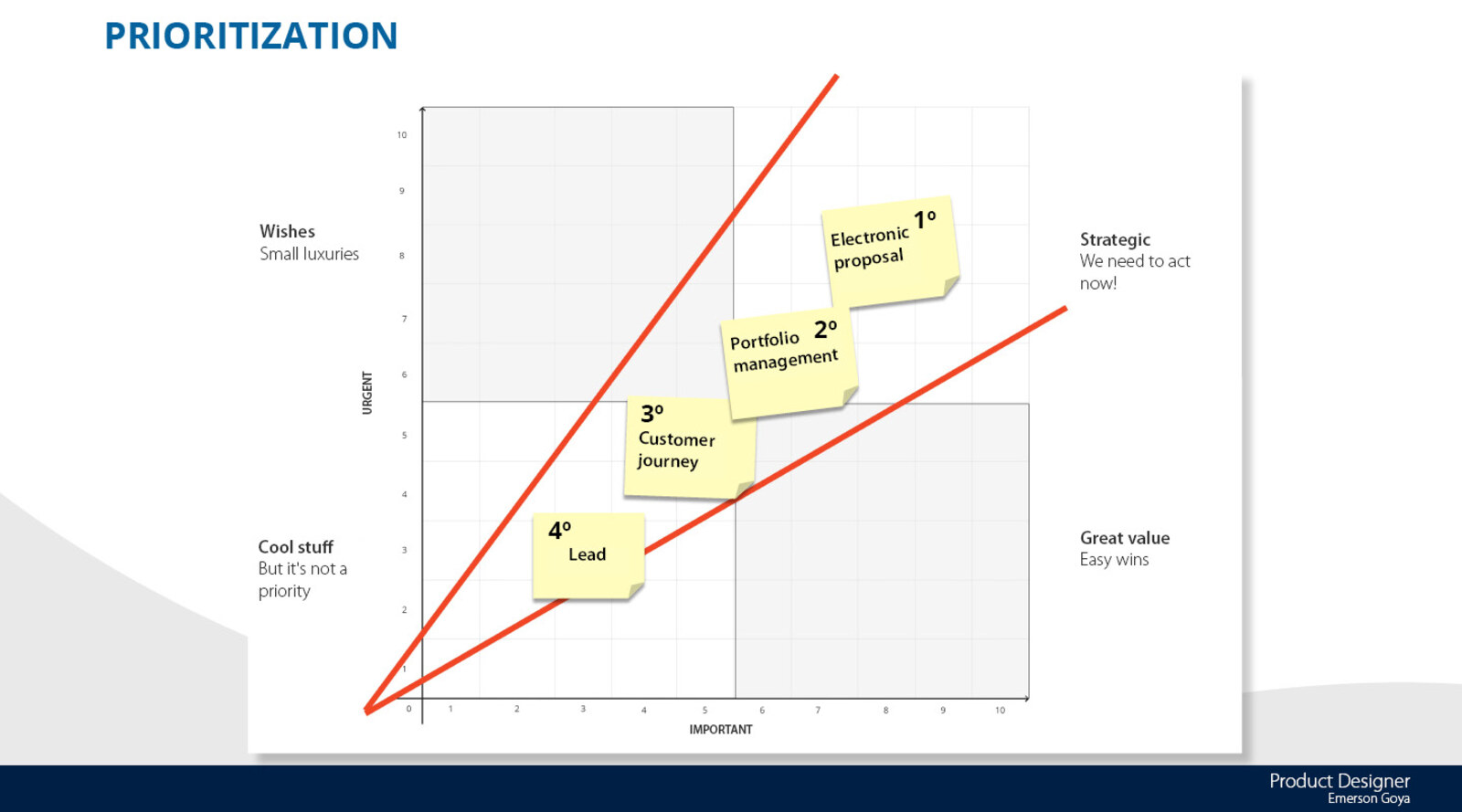
Prioritization Result

Final ranking: electronic proposal, portfolio management, customer journey and lead, by urgency and importance

Ideation, flows & prototype

From Crazy 8s sketches to the high-fidelity proposal flow with modular navigation.

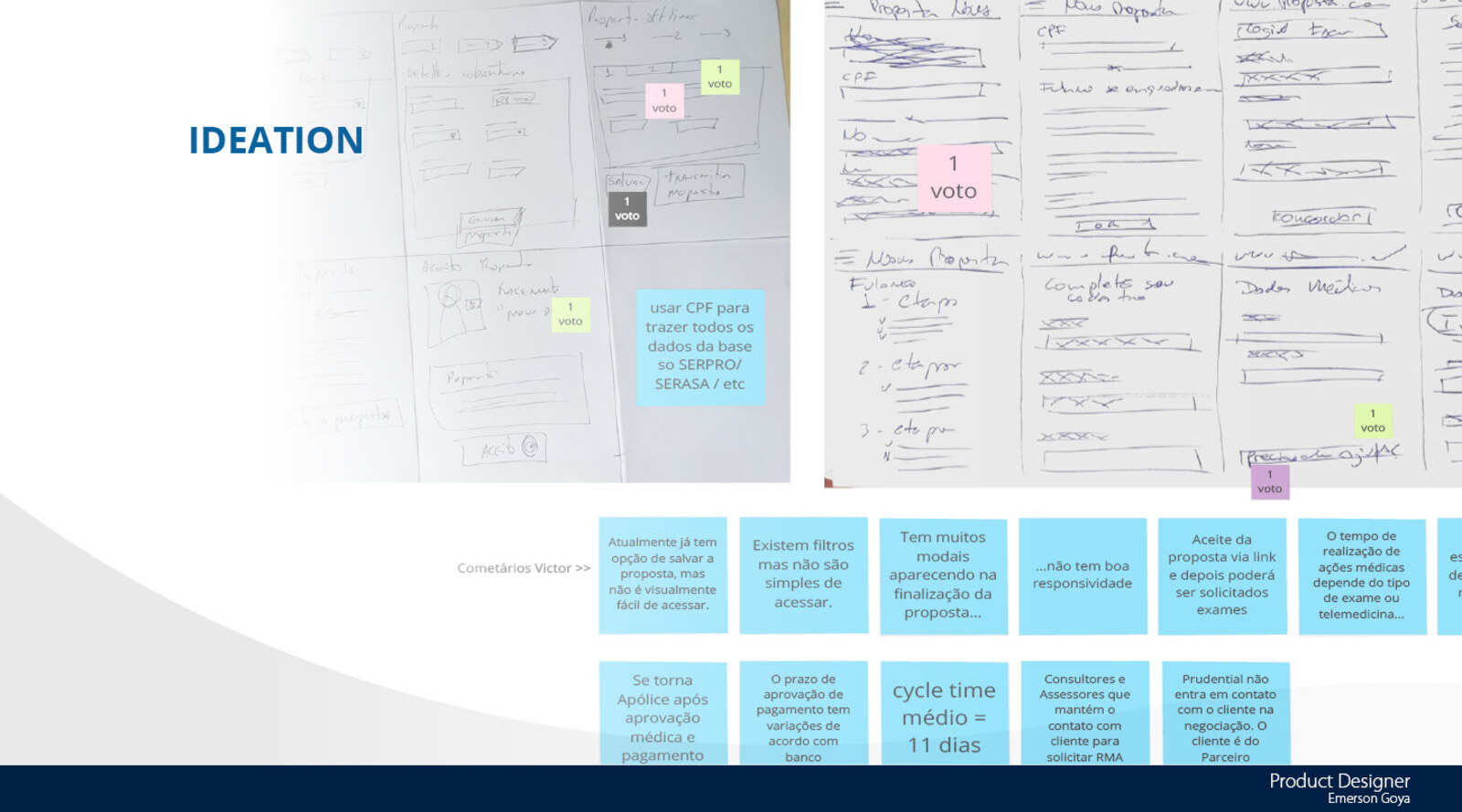
Ideation & Dot-Voting

Hand-drawn concepts for the electronic proposal with dot-voting from stakeholders

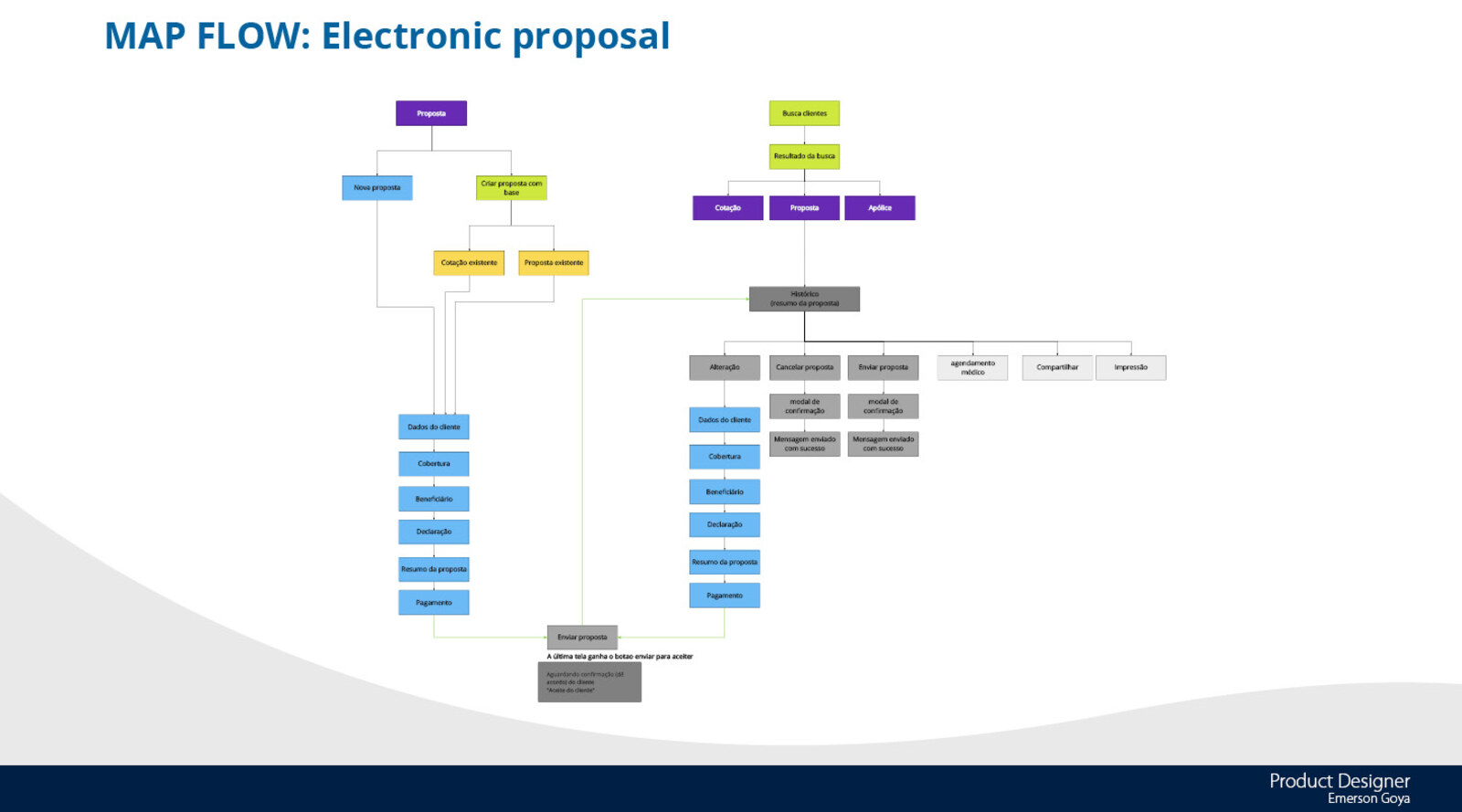
Map Flow: Electronic Proposal

Information architecture map for creating and tracking an electronic proposal

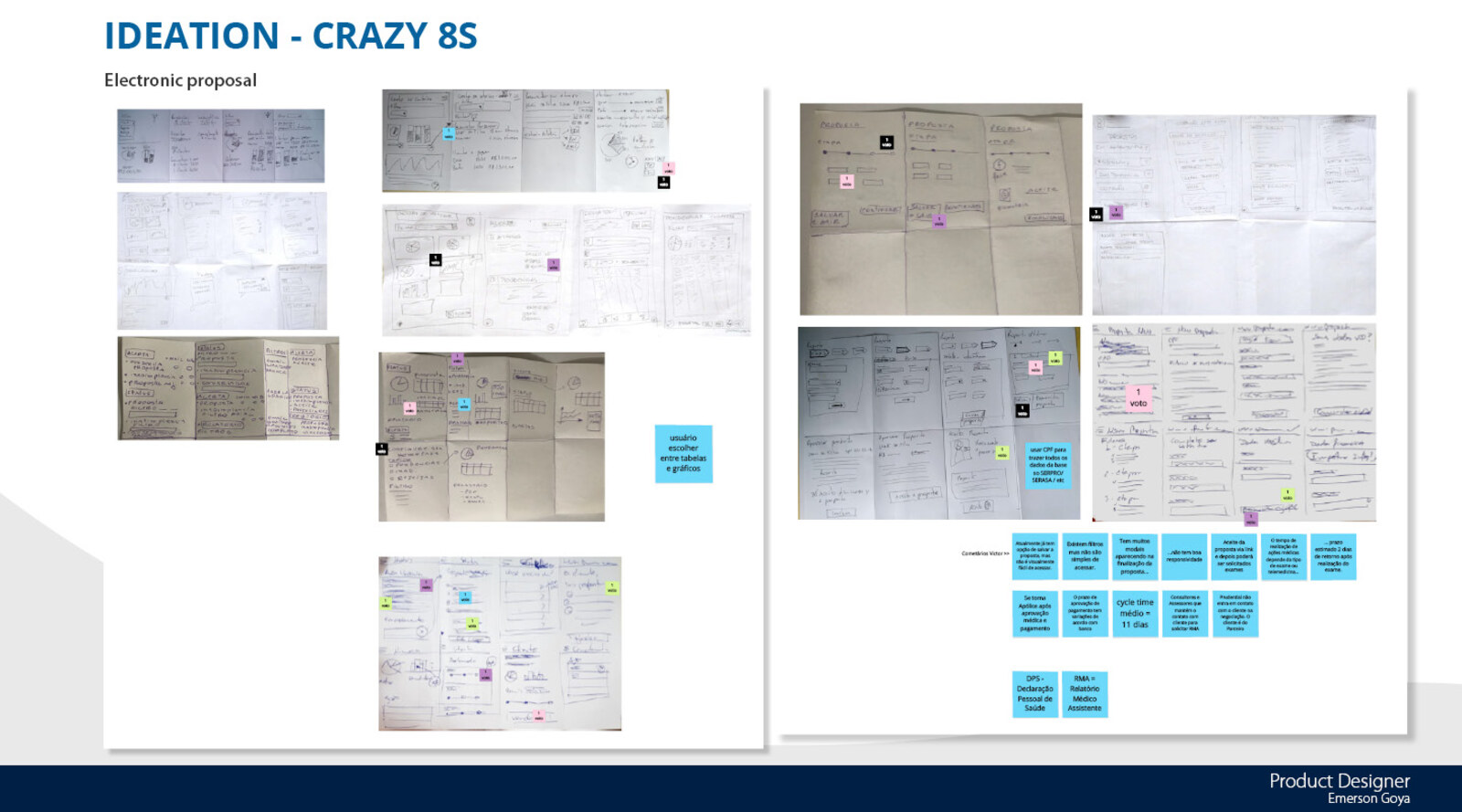
Crazy 8s

Crazy 8s sketches exploring layout options for the electronic proposal

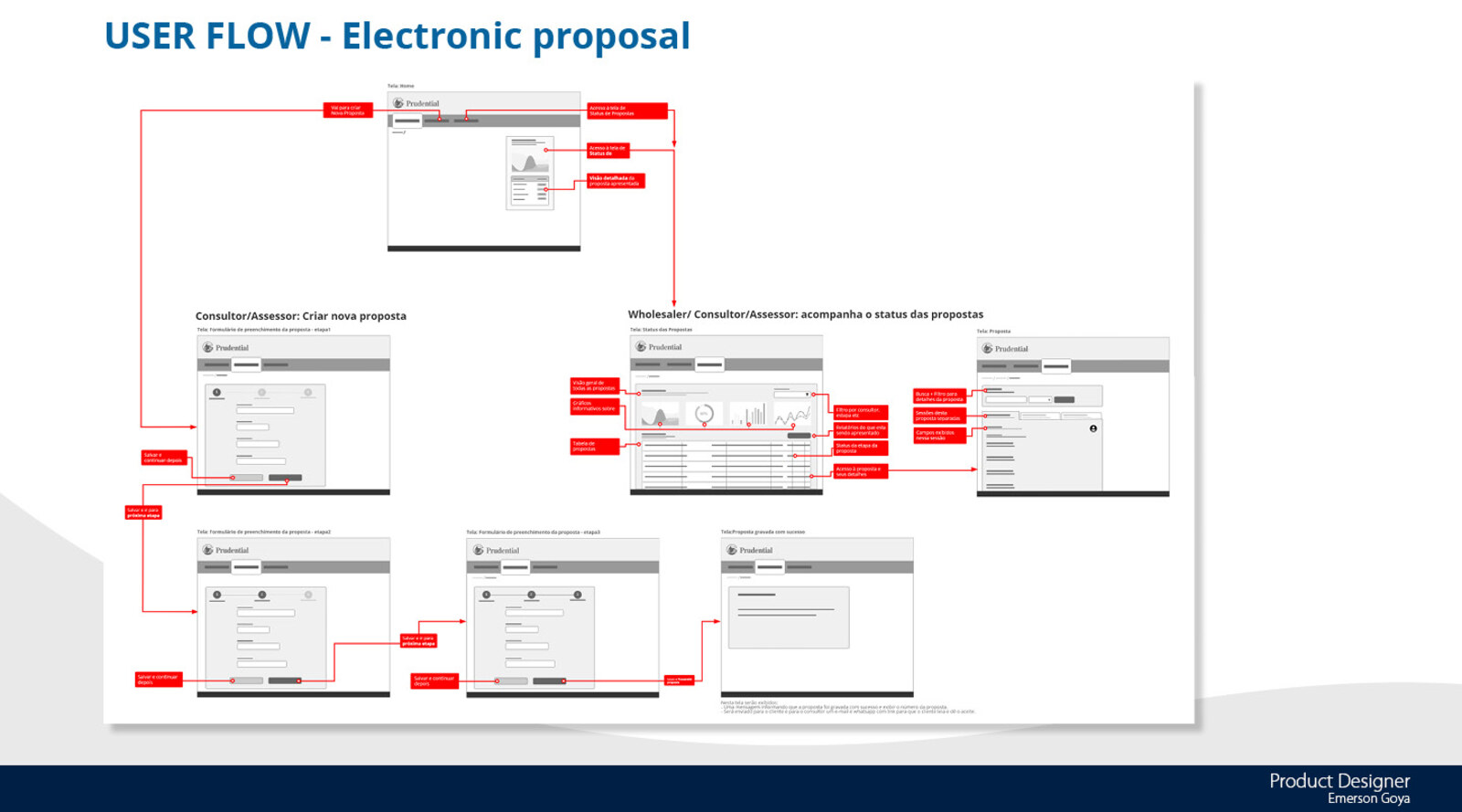
User Flow: Electronic Proposal

Annotated wireframe user flow for creating and tracking a proposal

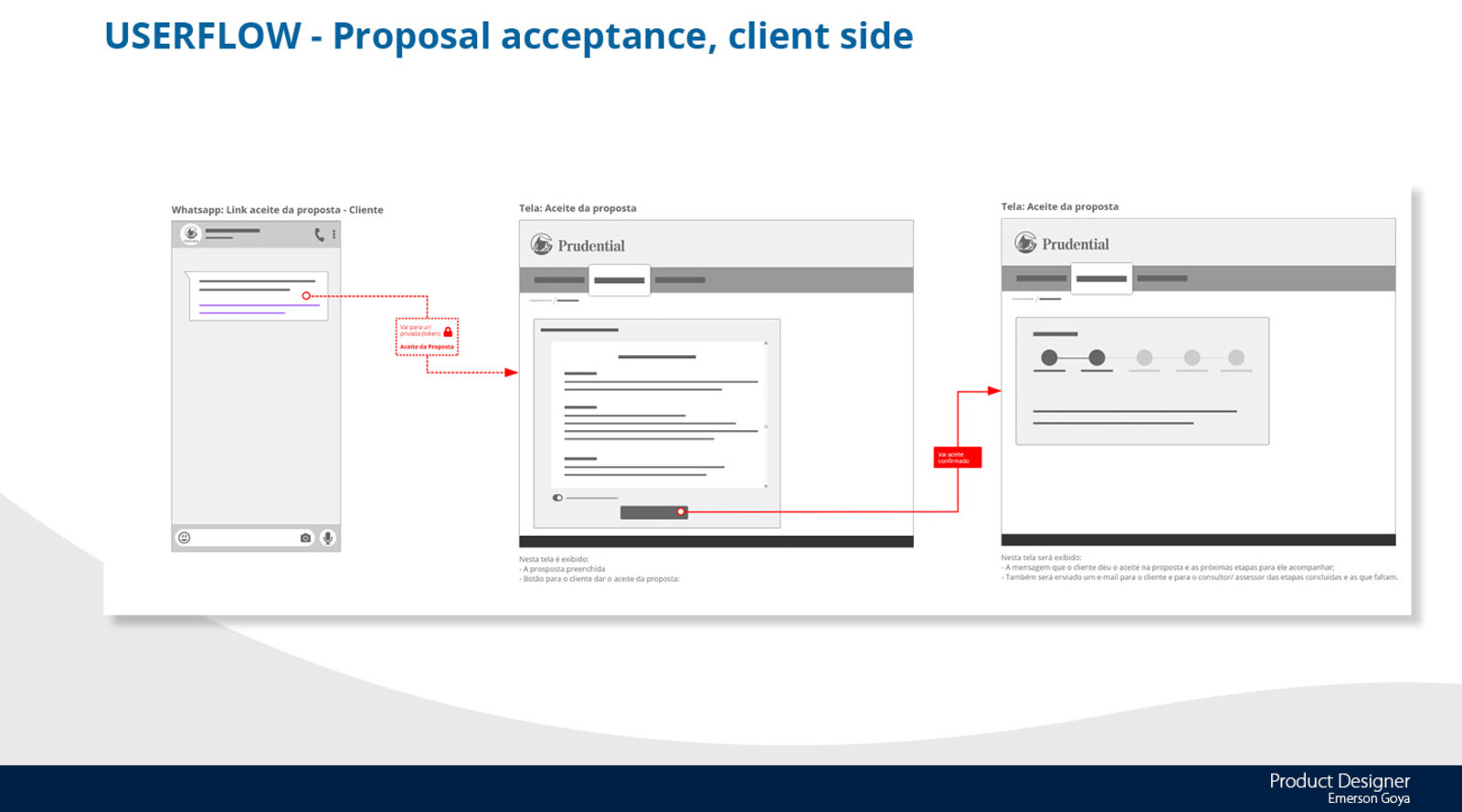
User Flow: Client Acceptance

Client-side proposal acceptance flow via WhatsApp link

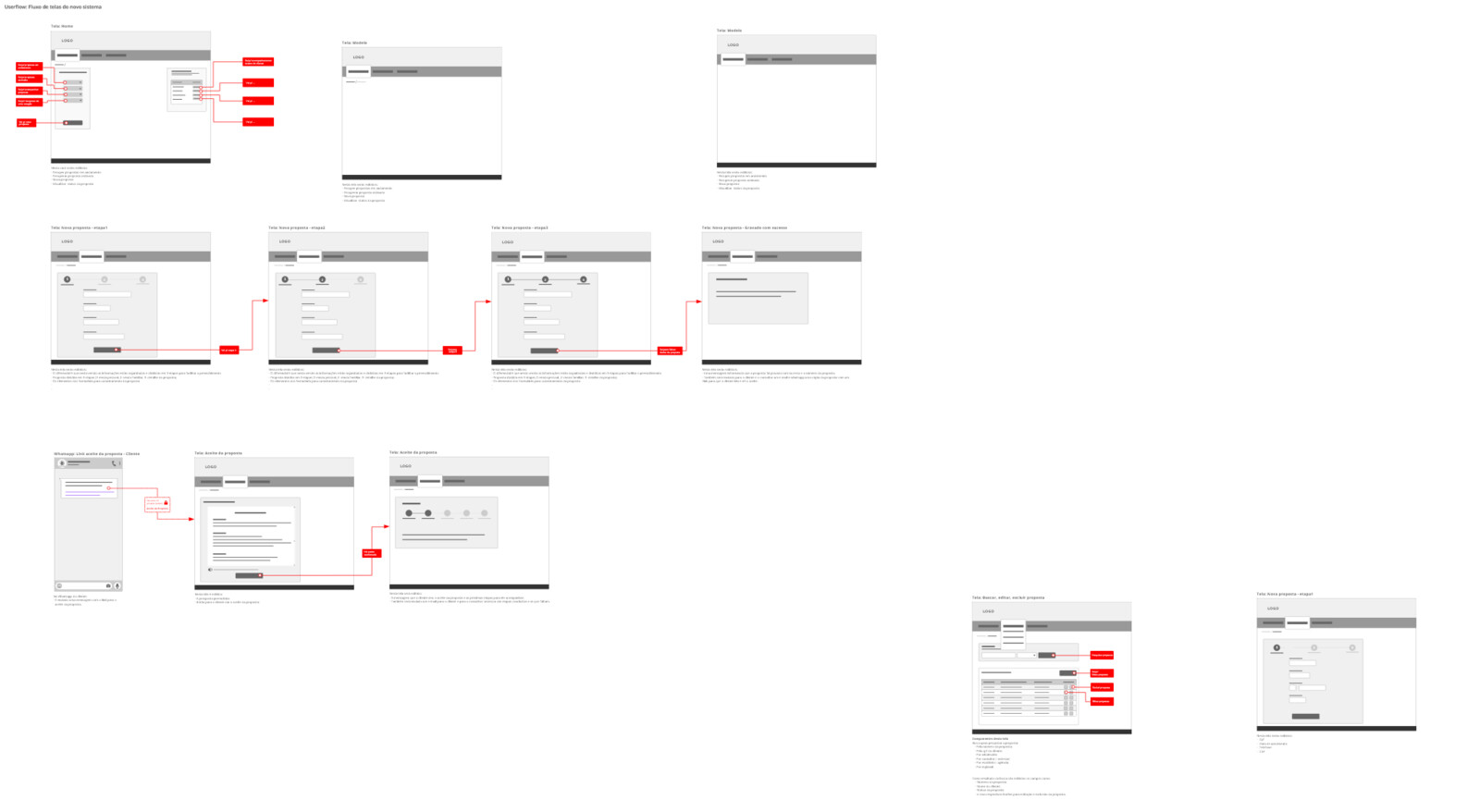
Full System Userflow

Complete userflow diagram mapping every screen of the new proposal system

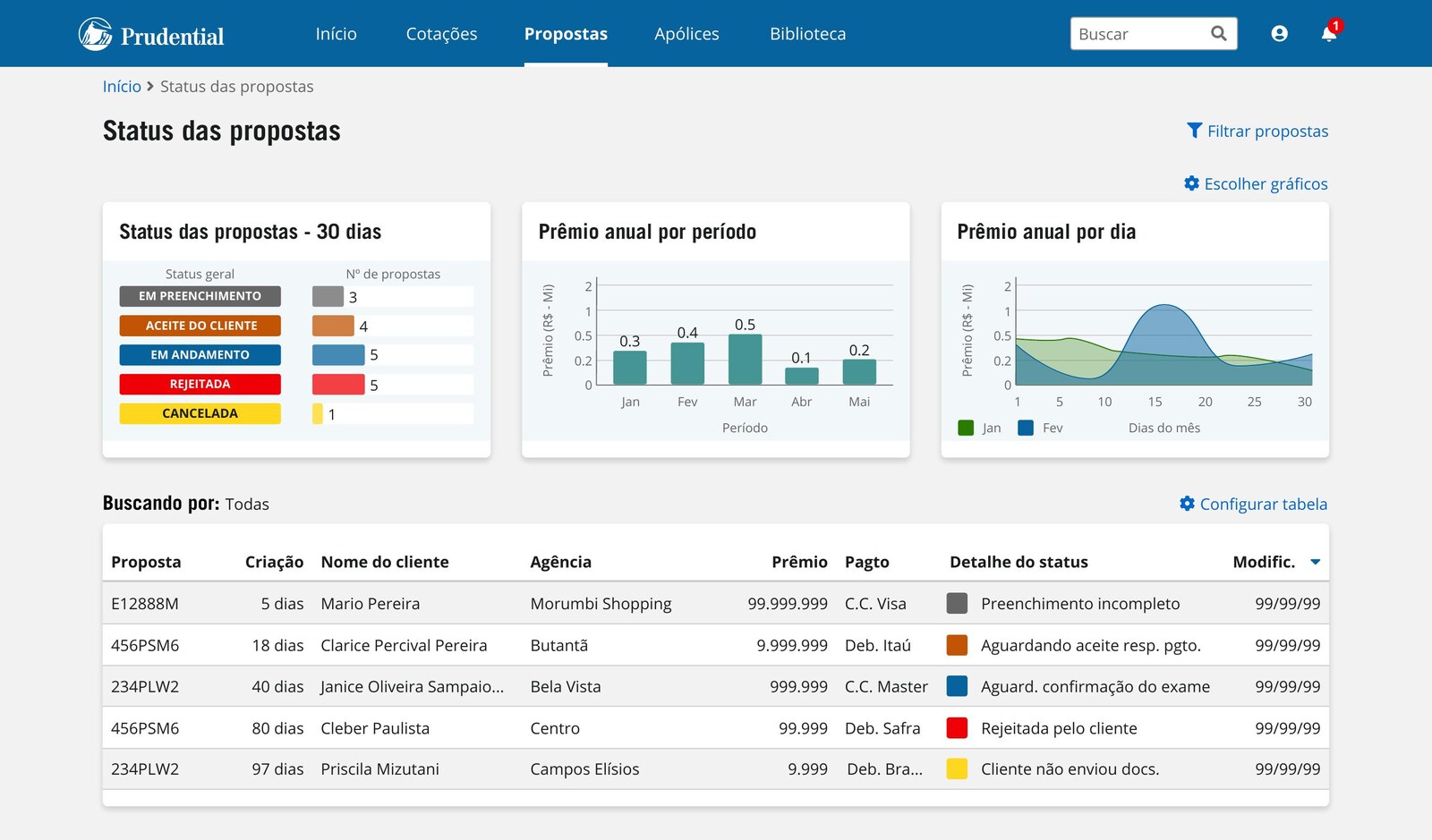
Proposal Status Dashboard

Dashboard showing proposal status breakdown, premium charts and a searchable proposal table

High-Fidelity Prototype

Desktop and mobile prototype of the new proposal flow with modular step navigation

Modular Proposal Navigation

High-fidelity screen of the electronic proposal showing the Etapas da proposta modular sidebar navigation

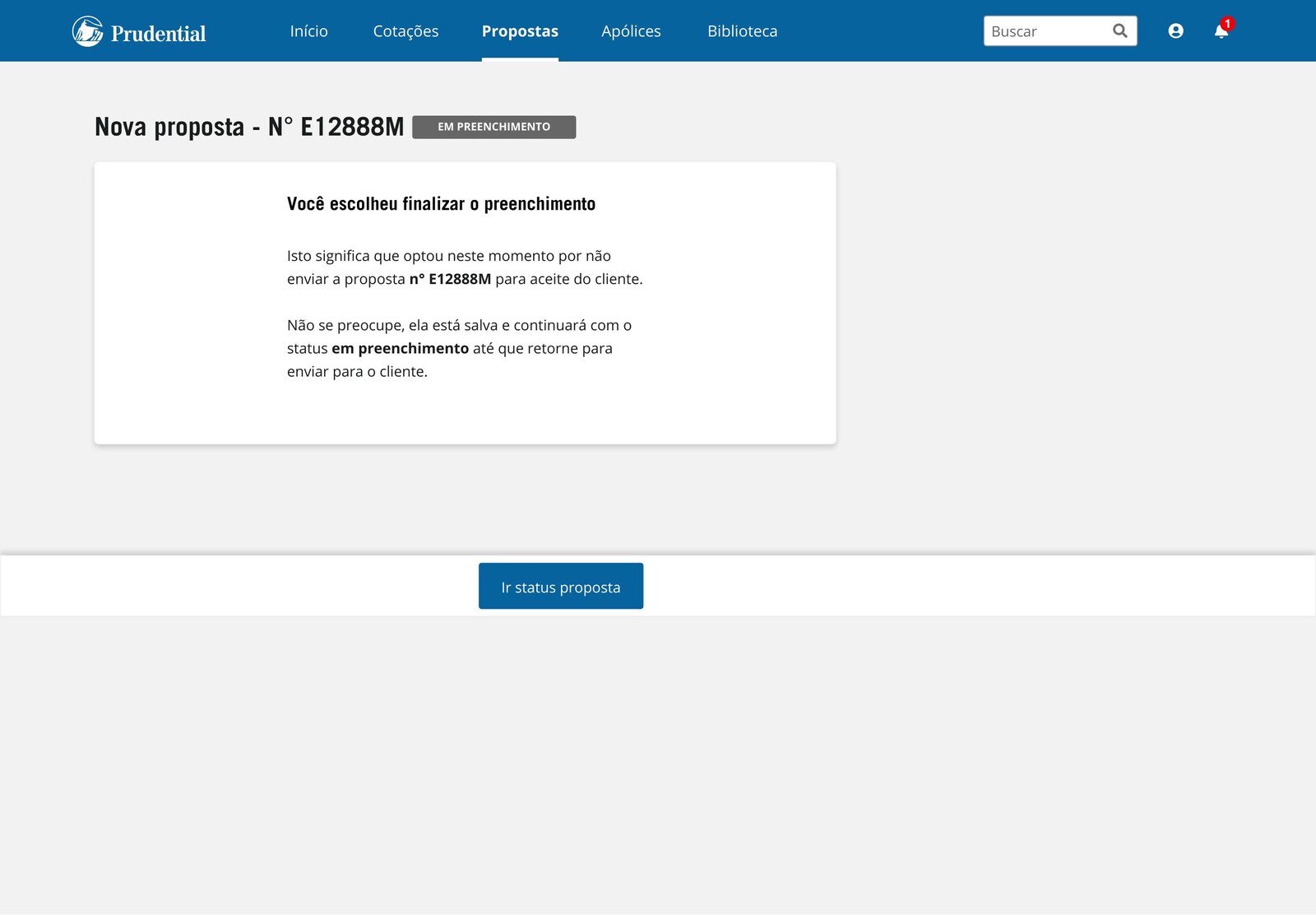
Save & Resume Later

Confirmation screen for saving an incomplete proposal to finish later, keeping its em preenchimento status

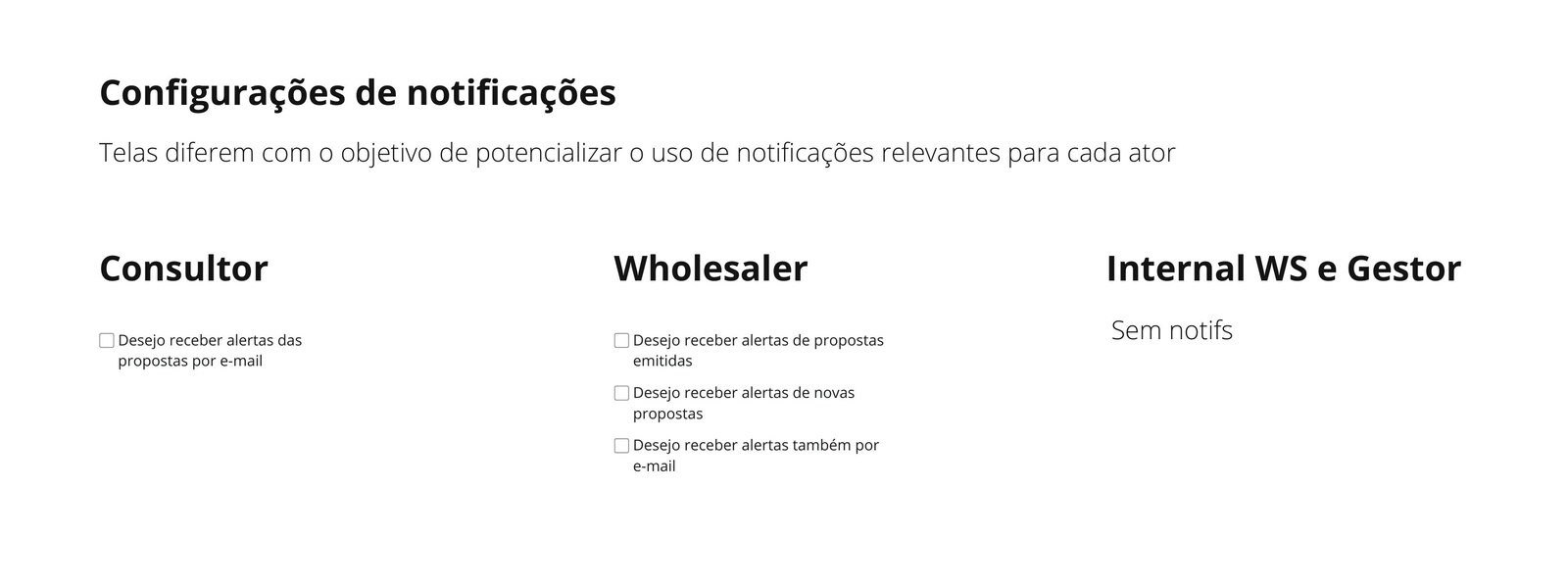
Multi-Actor Access Design

Notification settings screen configured differently for Consultor, Wholesaler and Internal WS e Gestor roles

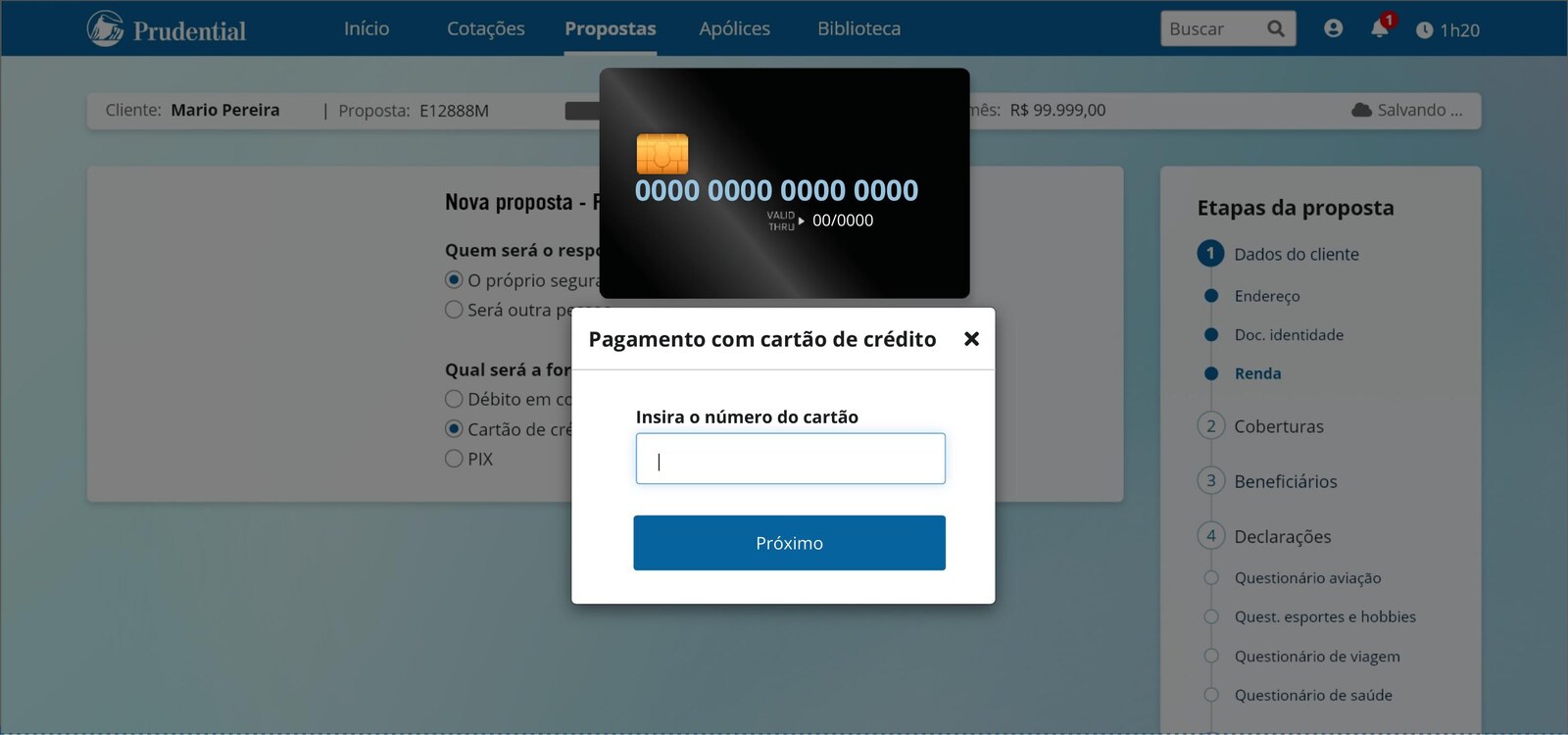
Payment Flow

Credit card payment modal within the proposal flow

Coverage Selection

Prototype screens for selecting insurance coverage and add-ons

Behind the scenes

Whiteboards, post-its and the hybrid (and mid-pandemic) sessions that got us there.

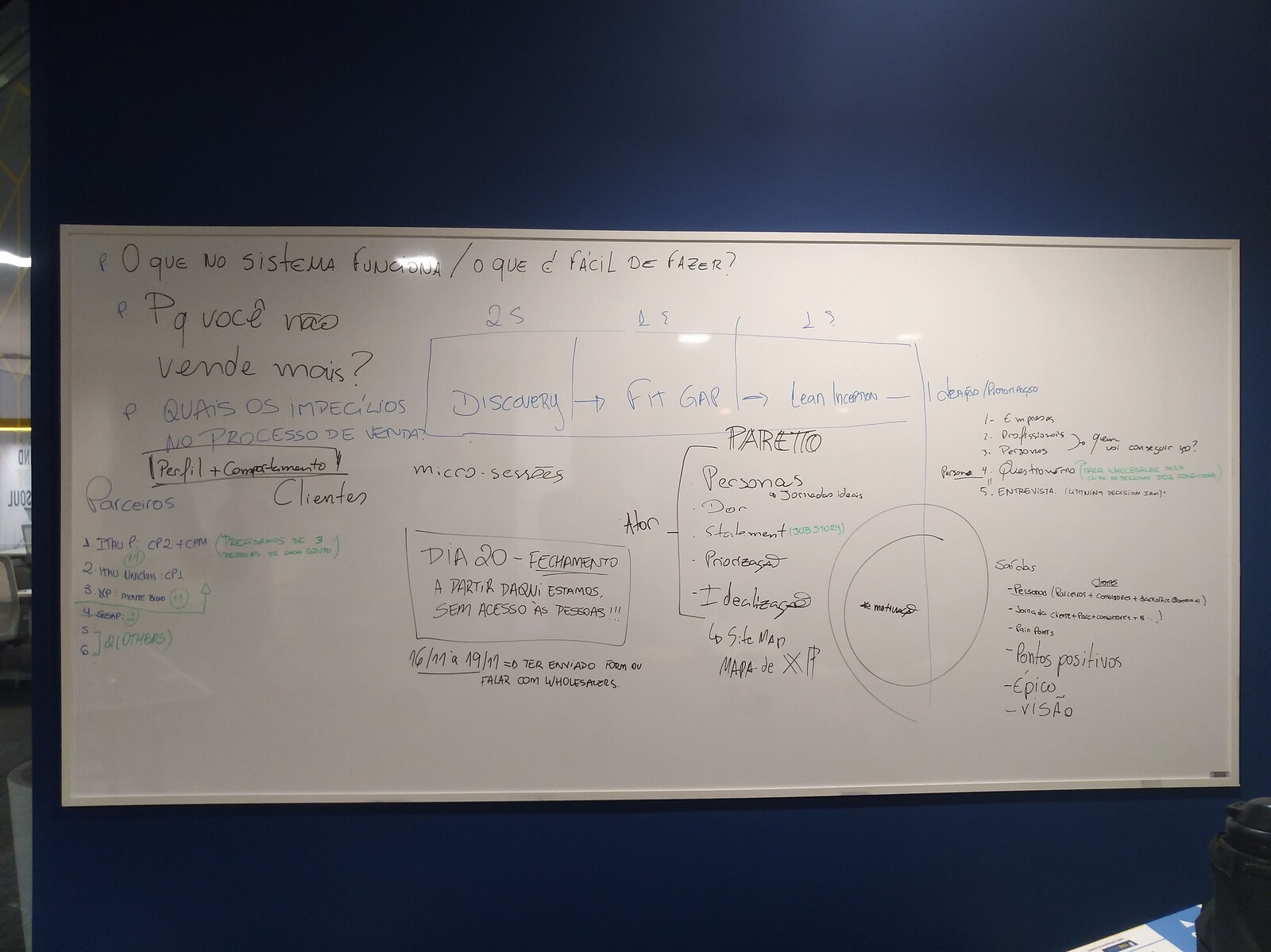
Discovery Kickoff

Whiteboard mapping the Discovery, Fit Gap and Lean Inception methodology used to structure the project

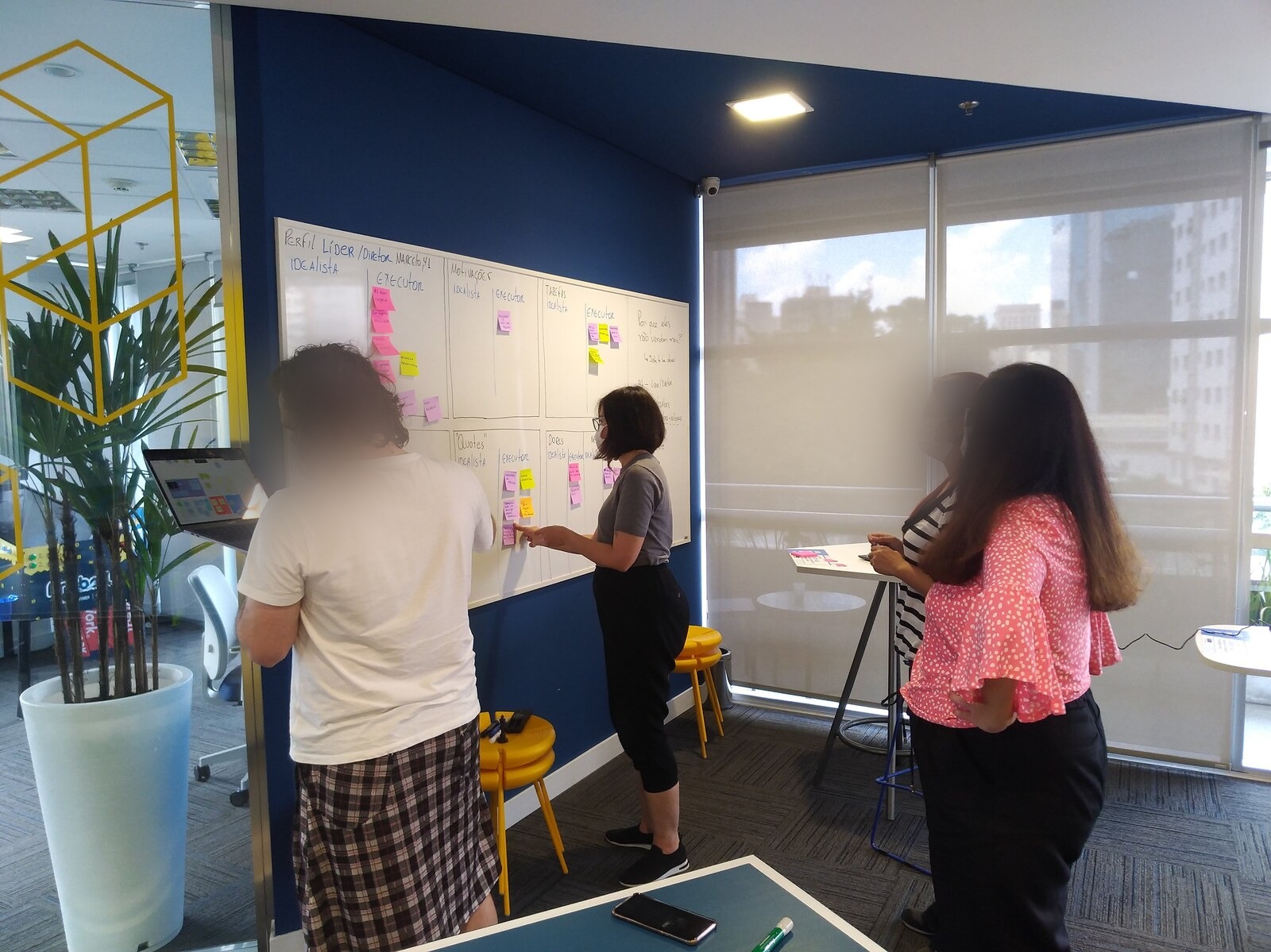
Jobs-to-Be-Done Session

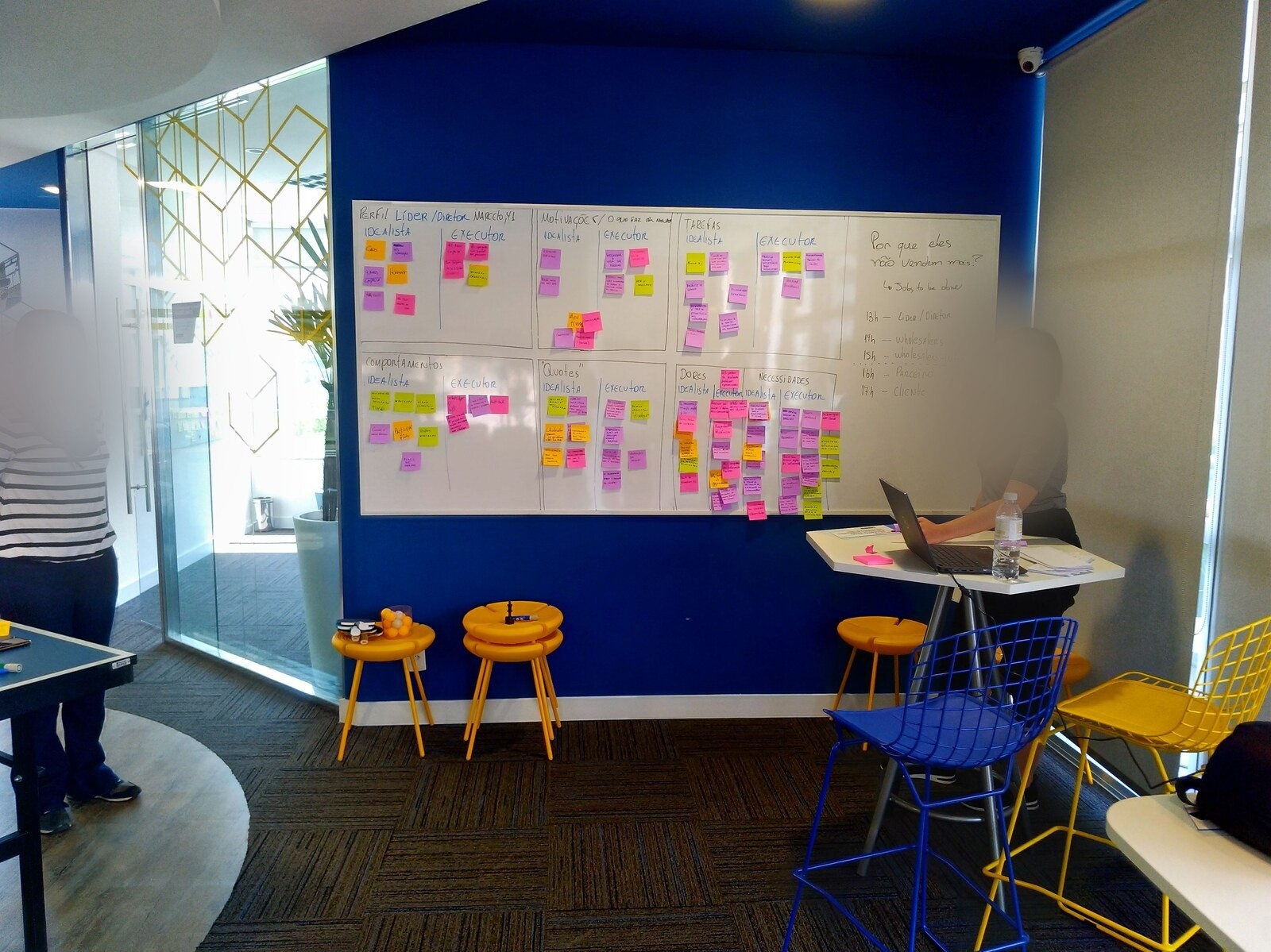
Team working on a physical whiteboard during a Jobs-to-Be-Done exercise

Wholesaler Persona Board

Wide view of the whiteboard mapping wholesaler profile, motivations, tasks and pains

Wholesaler Persona Detail

Close-up of post-its detailing wholesaler behaviors, quotes and needs

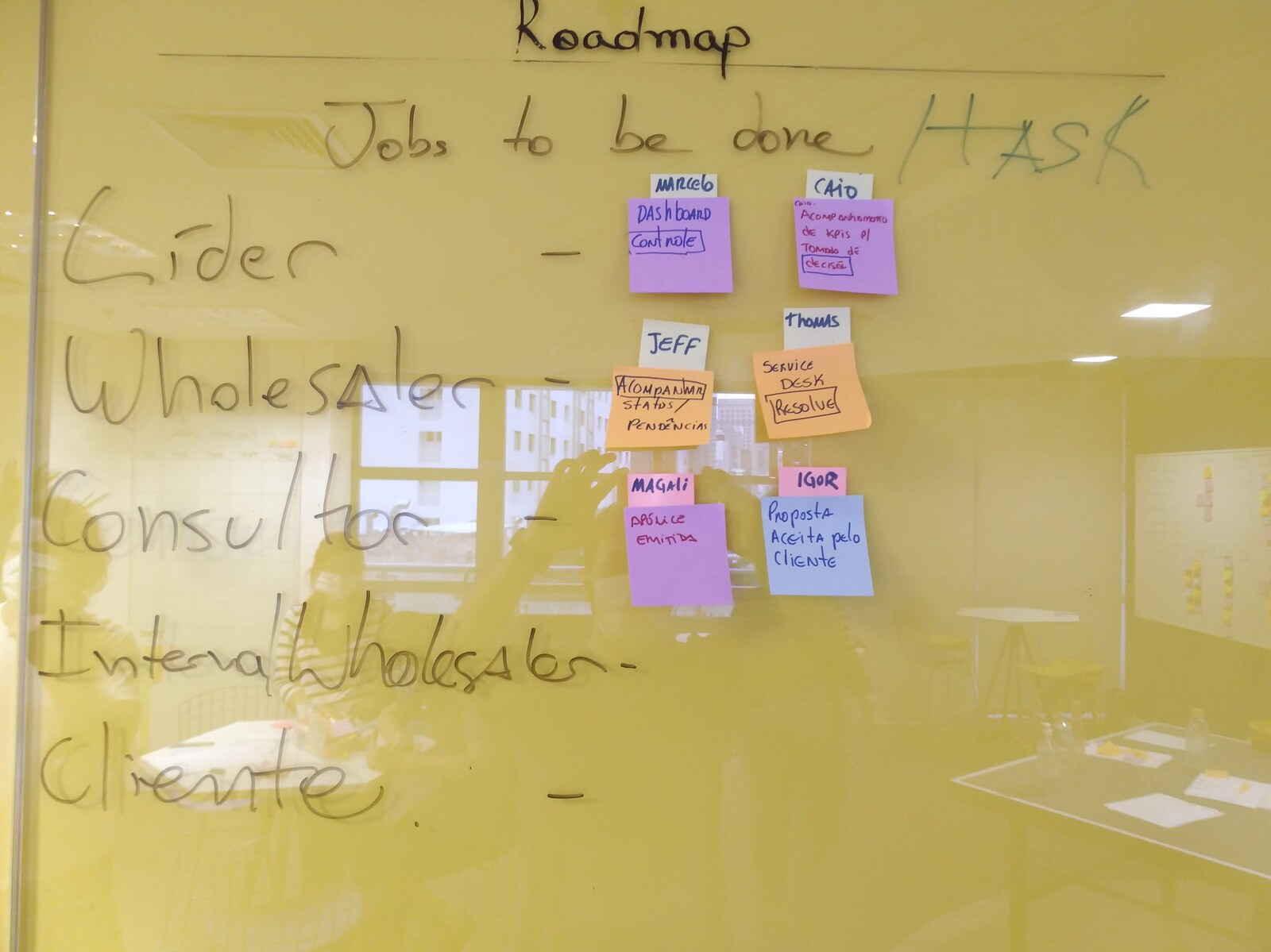
Jobs-to-Be-Done Roles

Whiteboard with jobs-to-be-done post-its assigned by role across the team

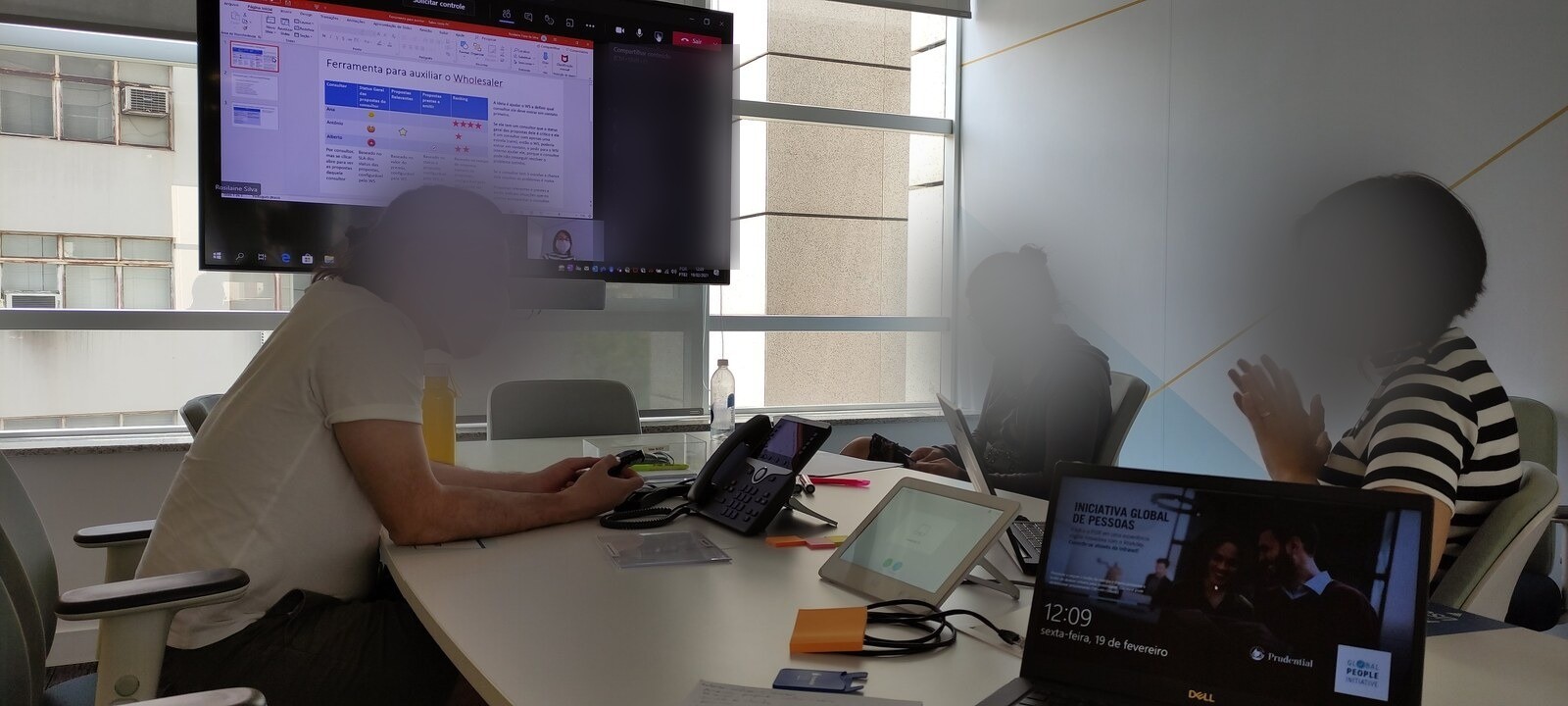
Hybrid Remote Session

In-person and remote team members reviewing a wholesaler tool proposal together, February 2021

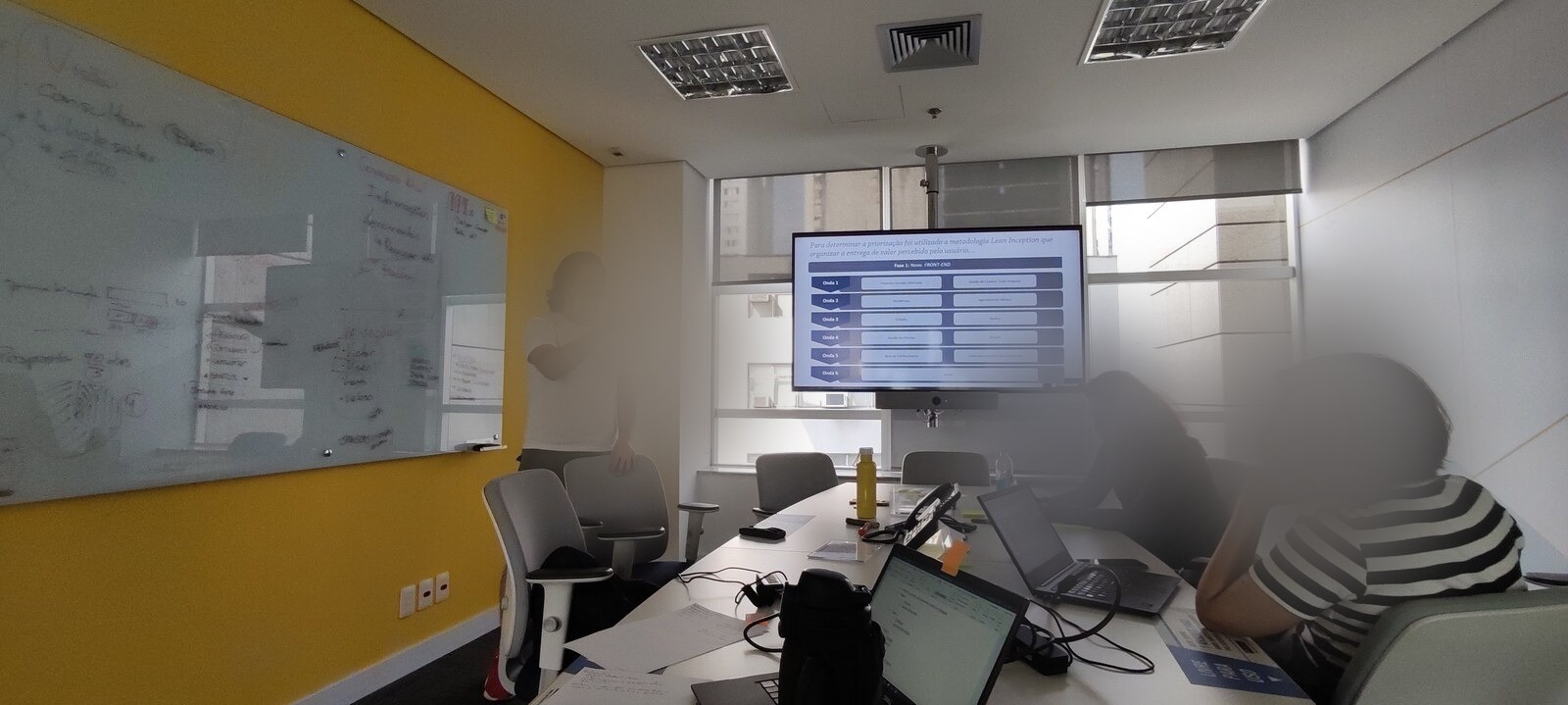
Reviewing the Lean Inception Waves

Team reviewing prioritized delivery waves defined through Lean Inception

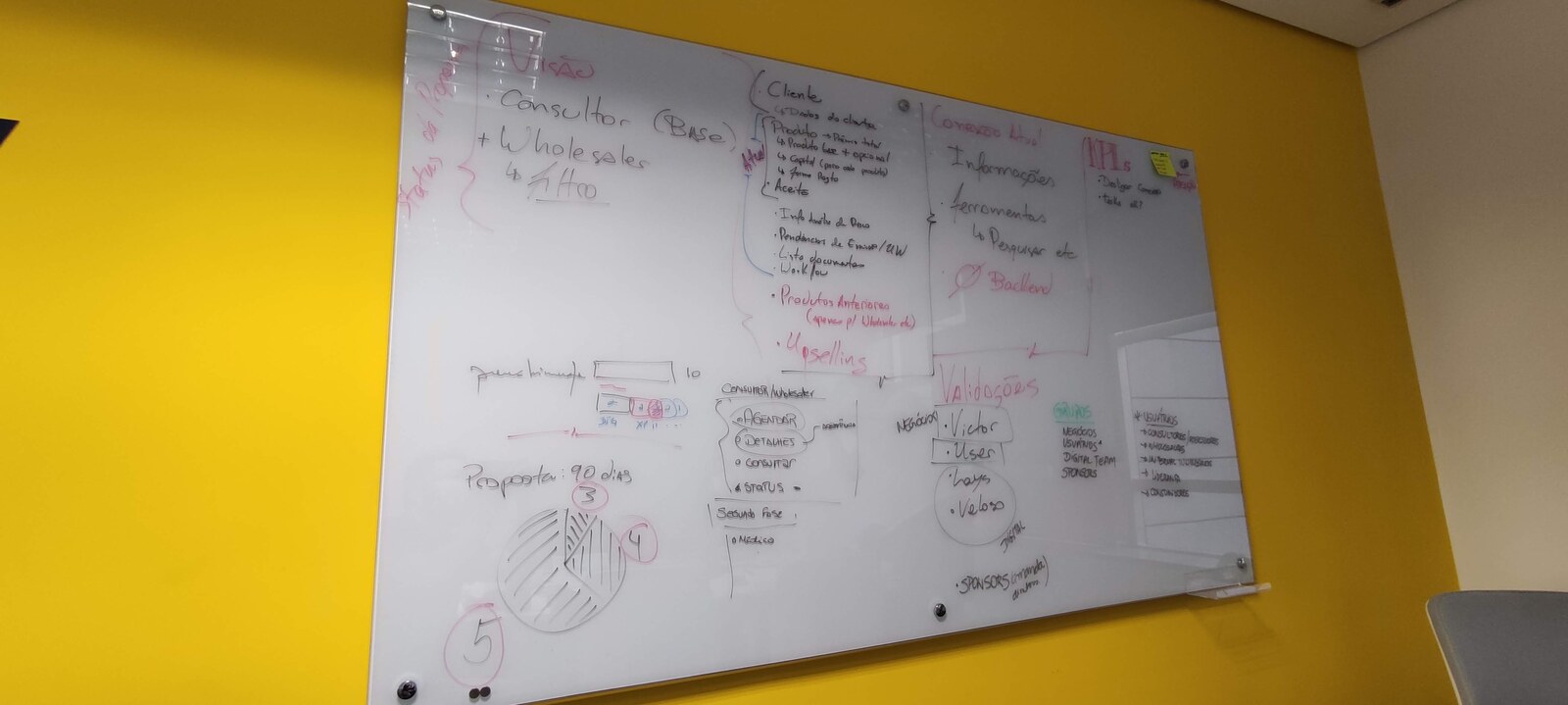
Proposal Flow Whiteboard

Whiteboard detailing the proposal data structure, KPIs and validation flow

Risk Mitigation

To ensure Design System adoption by all stakeholders:

  • Code-Ready Guidelines: Complete technical documentation with components ready for implementation
  • Collaborative Workshops: 64 participants (designers, devs, product owners) in prioritization sessions
  • Pilot with Itaú: Initial validation with main partner before complete rollout
  • Controlled Flexibility: Customizable design tokens (colors, logos) while maintaining fixed structure

Measurable Results

+18%
Profitability Increase
10
Complete Personas Created
64
Workshop Participants
11 days
Average Issuance Cycle

Deliverables:

  • Complete sales journey mapping for 10 personas
  • Design System with 45+ reusable components
  • Prototypes tested with consultants and brokers
  • Code-ready technical documentation for developers

What Got Worse

During Design System implementation:

  • Learning curve for devs: Initial onboarding +2 weeks for technical teams to learn the system
  • Initial resistance: Some partners wanted more customization than the system allowed
  • Necessary refactoring: Legacy code from 2 partners needed to be rewritten (cost not initially planned)
  • Tooling limits: Adobe XD was the only tool we had access to at the time for the design system and wireframes, and it couldn't handle versioning at the scale we needed. Devs would grab a component from a file that had already changed somewhere else. We ended up managing it by hand: separate versioned files split by dev story, matched against tickets in Azure DevOps.

Learning: Investment in documentation and upfront training would have reduced friction in technical onboarding.

Would Do Differently Today

With current Generative AI and Agentic Workflows:

  • Figma instead of Adobe XD: Real-time, single-source files would have killed the versioning problem outright. Everyone working off the same live file instead of separate exported versions, so devs never grab a component that's already changed somewhere else.
  • Automated Design Token Audits (Custom Agents): Deploy specialized AI agents (via Claude Code and custom Figma skills) to continuously audit design token compliance across all partner implementations, eliminating manual QA.
  • Agentic Accessibility & Copy Reviews: Integrate AI workflows to automatically test component variants for WCAG 2.1 compliance and brand tone alignment before code handoff.
  • Real-time Documentation Sync: Use LLM pipelines to auto-generate and update component specs and integration guidelines whenever token values or code props change.
  • Dynamic Journey Personalization: Tailor proposal journeys dynamically based on customer risk profile and bank partner context, driving higher conversion without creating visual fragmentation.

Estimated impact: 50% reduction in new partner onboarding time + zero manual design QA cycles + 10-15% increase in conversion via dynamic personalization.

Recognition

My counterpart carried the platform through to completion over the next few years after my part wrapped. It went on to win two industry awards:

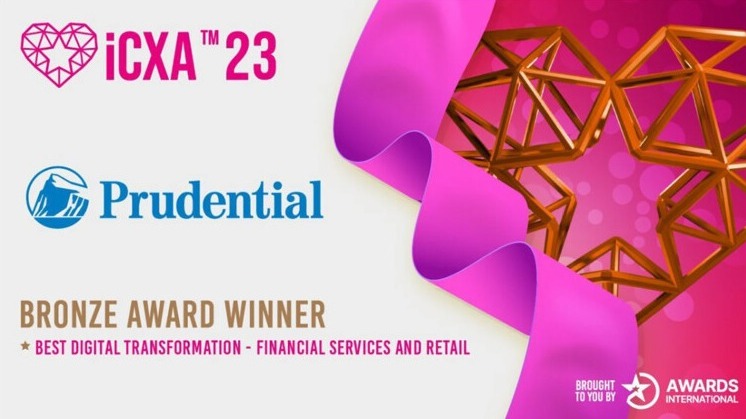
Insurer Innovation Awards 2023, Finalist Innovation Gold, Americas, presented by The Digital Insurer, awarded to Prudential International Customer Experience Awards 2023, Bronze Award Winner, Best Digital Transformation: Financial Services and Retail, awarded to Prudential

Deep Dive

Individual Life Insurance Plan Documentation

Open full view ↗ (39 pages)